
 11-Sep-2026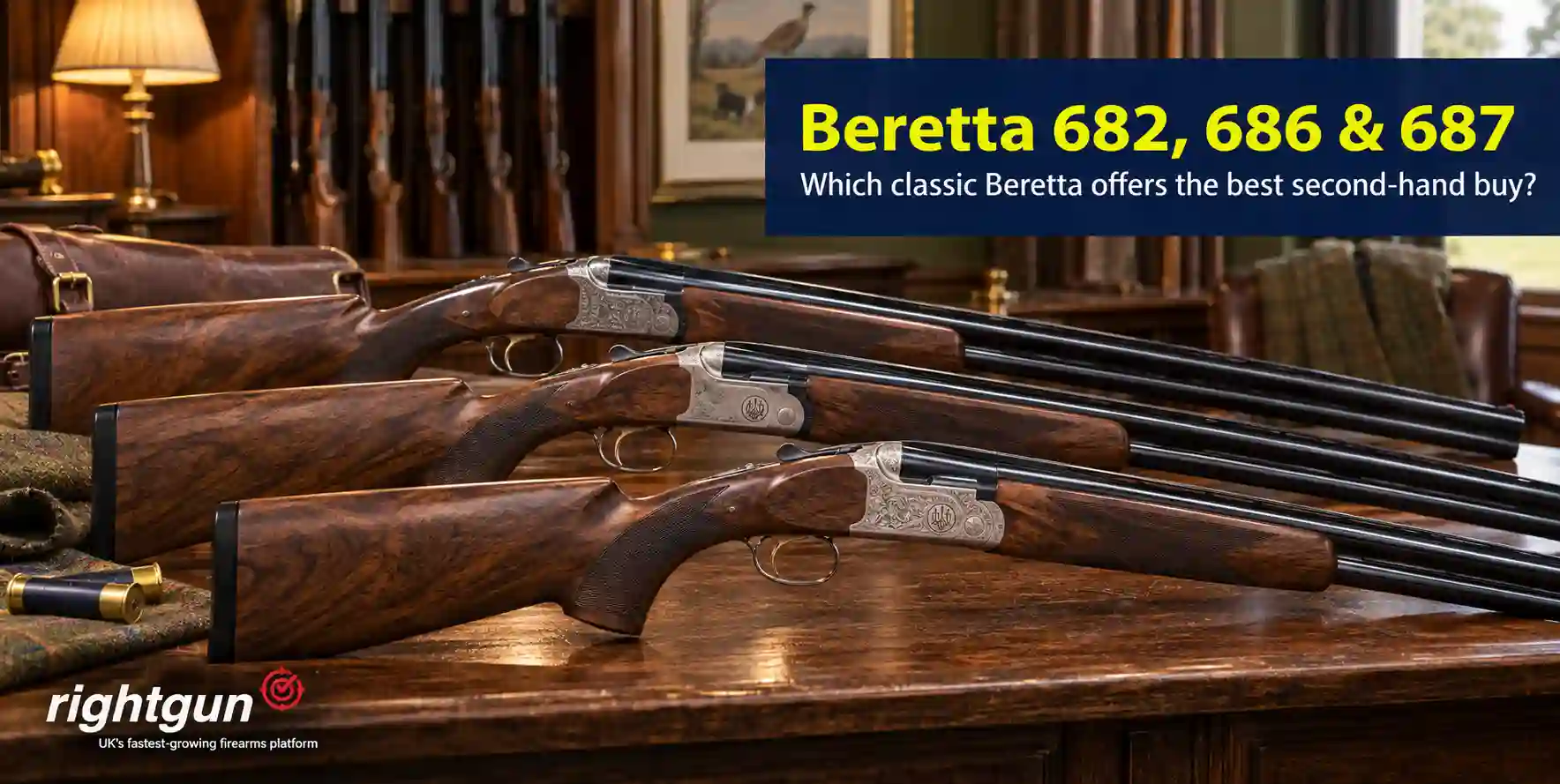
Walk into any UK clay ground or game shoot, and you will find Beretta 68-series guns everywhere. The 682, 686 and 687 have been the backbone of Beretta’s over-and-under range for decades, and the second-hand market is full of them at prices that make a first “proper” gun realistic. The trouble is that the three model numbers look almost identical on paper, the sub-names (Gold E, Silver Pigeon, EELL, Super Sport, X-Trap) multiply confusingly, and a lot of listings simply say “Beretta 68x” and leave you to work it out.
This guide untangles the family. It explains what actually separates a 682 from a 686 and a 687, which 682 variants you will meet on the used market, and which model suits clays, game, or a bit of both. Prices move with condition, grade and gauge, so we keep figures general; the point is to help you recognise the right gun when it appears.
The 68-series in one paragraph
All three share the same basic mechanical DNA: a low-profile boxlock action, Beretta’s conical locking lugs, replaceable hinge pins and a reputation for going on almost indefinitely with basic care. The differences are in how each gun is set up and finished. Broadly, the 686 is the entry point, the 687 is the same gun with more engraving and better wood, and the 682 is the competition-oriented gun with heavier barrels, an adjustable trigger, and a stock cut for clay shooting. That is a simplification, but it is the right mental model to start with.
Browse: Beretta 682 · Beretta 686 · Beretta 687 · All Beretta shotguns · Beretta 692
Beretta 686: The honest all-rounder
The 686 is the gun most UK shooters started on, and many never moved away from. Field versions are light enough to carry all day on a driven day, while Sporting versions carry a little more weight in the barrels for clays. Finish is plain, a silver or blued action with modest scroll work, and the wood is functional rather than pretty. None of that matters when you are paying for a gun you intend to use.
On the second-hand market, the 686 is the model that gives the least trouble. The action is under-stressed, parts are plentiful, and any competent gunsmith knows it inside out. The main things to check are the usual ones for any older over-and-under: that it closes on the face without slack, the ejectors time together, and the barrels ring true. A well-used 686 with a bit of honest wear is often a better buy than a lightly used gun of a fancier grade that has been left in a cabinet.
Browse: Beretta 686 · Beretta 686 over-and-under · Beretta Ultra · Browning B525 · Miroku MK38
Beretta 687: The same gun, dressed for the field
The 687 is where the Silver Pigeon name gets attached to the higher grades. Mechanically, it is a 686. What you are paying extra for is presentation: more elaborate engraving, game scenes on some versions, and noticeably better figure in the stock and forend. At the top of the tree sits the EELL, with sidelock-style plates and hand-finished wood that puts it in a different price bracket altogether.
For a UK game shooter who wants one gun that looks right on a smart day and still does the job on a clay ground, a 687 in 12 or 20 gauge is a very safe choice. Twenty-bore 687s are particularly sought after and hold their value well, which is worth remembering if you expect to move the gun on later. Because a 687 is bought partly for its looks, condition matters more than it does with a 686: check for dings in the wood, worn chequering and any loss of case colour or engraving crispness on the action.
Browse: Beretta 687 · Beretta 687 over-and-under · Beretta 686 · Browning B725 · Miroku MK60
Beretta 682: The competition gun
The 682 was Beretta’s serious clay gun before the DT10 and DT11 era, and it remains the pick of the three for anyone shooting mainly clays. It carries more weight than a 686, which soaks up recoil over a long day, and it comes with features aimed at the competitive shooter: an adjustable trigger, a higher and often adjustable comb on later versions, and a stock shape designed for a consistent mount rather than for carrying. Many were sold with multichoke barrels in Sporting configuration, though fixed-choke Trap and Skeet guns also turn up.
The 682 is the gun most likely to have had a hard life, simply because competition shooters put thousands of cartridges through them each season. That is not a reason to avoid one; the action is famously robust, but it is a reason to inspect carefully. Look for evidence of routine servicing, check the trigger pulls are crisp, and check the top lever still sits to the right of centre, which indicates there is locking life left.
Browse: Beretta 682 · Beretta DT10 · Beretta DT11 · Beretta 692 · Beretta 694
The 682 variants explained
This is where most of the “Beretta 682 types” searches come from, so here is the short version of what the names mean when you see them in a listing.
The plain 682 and the early 682 Sporting are the base competition guns, usually with a blued or silver action and plain wood. The 682 Gold added better wood and a more refined finish, and the 682 Gold E is the most common version on the UK used market; the “E” denotes the later specification with the improved adjustable trigger and, on most, an adjustable comb. It is the one to look for if you want a proven clay gun without paying DT prices. The 682 Super Sport is a Sporting-specific version with sporter barrels and a stock shape aimed at English Sporting, while Super Trap and Super Skeet guns are set up for those disciplines with appropriate rib heights and chokes; a Trap gun will shoot high and is not what you want for sporting. The 682 X-Trap is the last evolution, a trap-specific gun with an adjustable rib. Finally, the 682 Gold E Skeet and the rare 682 Continental are specialist guns and priced accordingly.
If a listing just says “682 Gold E, Sporting, multichoke” in 12 gauge with 30-inch barrels, that is the mainstream specification and the easiest to resell.
Browse: Beretta 682 · Beretta 682 over-and-under · Beretta DT10 · Beretta 694 · Browning B425
Which one should you buy?
For someone whose shooting is mostly clays, the 682, ideally a Gold E, is the obvious answer. It will out-handle a 686 on a sporting layout and will hold its value among people who know what they are looking at. For a game shooter who wants a light, reliable gun and does not care about engraving, a 686 Field is the sensible money. For a game shooter who wants something with a bit of presence and a stock they will enjoy looking at, a 687 in 12 or 20 bore is the classic choice, with the 20 gauge worth the premium if you can find one.
If you are buying one gun to do everything, a 686 or 687 Sporting with 30-inch multichoke barrels splits the difference well. It will shoot game comfortably and will not embarrass you at the clay ground.
Whatever you choose, gun fit matters more than the model number. All three guns come in a range of stock lengths and cast, and a 682 that fits you will beat a 687 that does not. If you can, mount the gun before you commit, and read our guide to shotgun fit if you are unsure what to look for.
Browse: Beretta 686 · Beretta 687 · Beretta 682 · Beretta A400 · All shotguns for sale
Frequently asked questions
What is the difference between a Beretta 682 and 686? The 682 is the competition gun: heavier barrels, an adjustable trigger and a stock shape for clays. The 686 is the lighter, plainer all-rounder sold in field and sporting configurations. The actions are closely related and equally durable.
Is the Beretta 687 better than the 686? Mechanically, they are the same gun. The 687 carries more engraving and better wood, so it costs more new and used. If you shoot rather than admire, a 686 gives the same performance for less.
What does “Gold E” mean on a Beretta 682? It identifies the later, refined version of the 682 with the improved adjustable trigger and, on most guns, an adjustable comb. It is the most common 682 on the UK second-hand market, and the one most buyers look for.
Are old Beretta 68-series guns still worth buying? Yes. The action is under-stressed and well supported by gunsmiths and parts suppliers, and a well-serviced example from the 1990s or 2000s will keep going for many years. Condition and fit matter far more than age.
Find your Beretta on Rightgun.uk
Rightgun.uk lists 682, 686 and 687 shotguns from private sellers and registered dealers across the UK, so you can compare grades, gauges and barrel lengths in one place. Start with the model pages above, filter by gauge and price, and contact the seller directly when you find the right gun.
Further reading: Beretta 682 review, Beretta 686 Silver Pigeon buyer’s guide, Beretta 687 Silver Pigeon III, Second-hand shotguns: the UK’s best buys, Beretta shotguns UK range guide and Shotgun fit explained.
