
 15-Jul-2026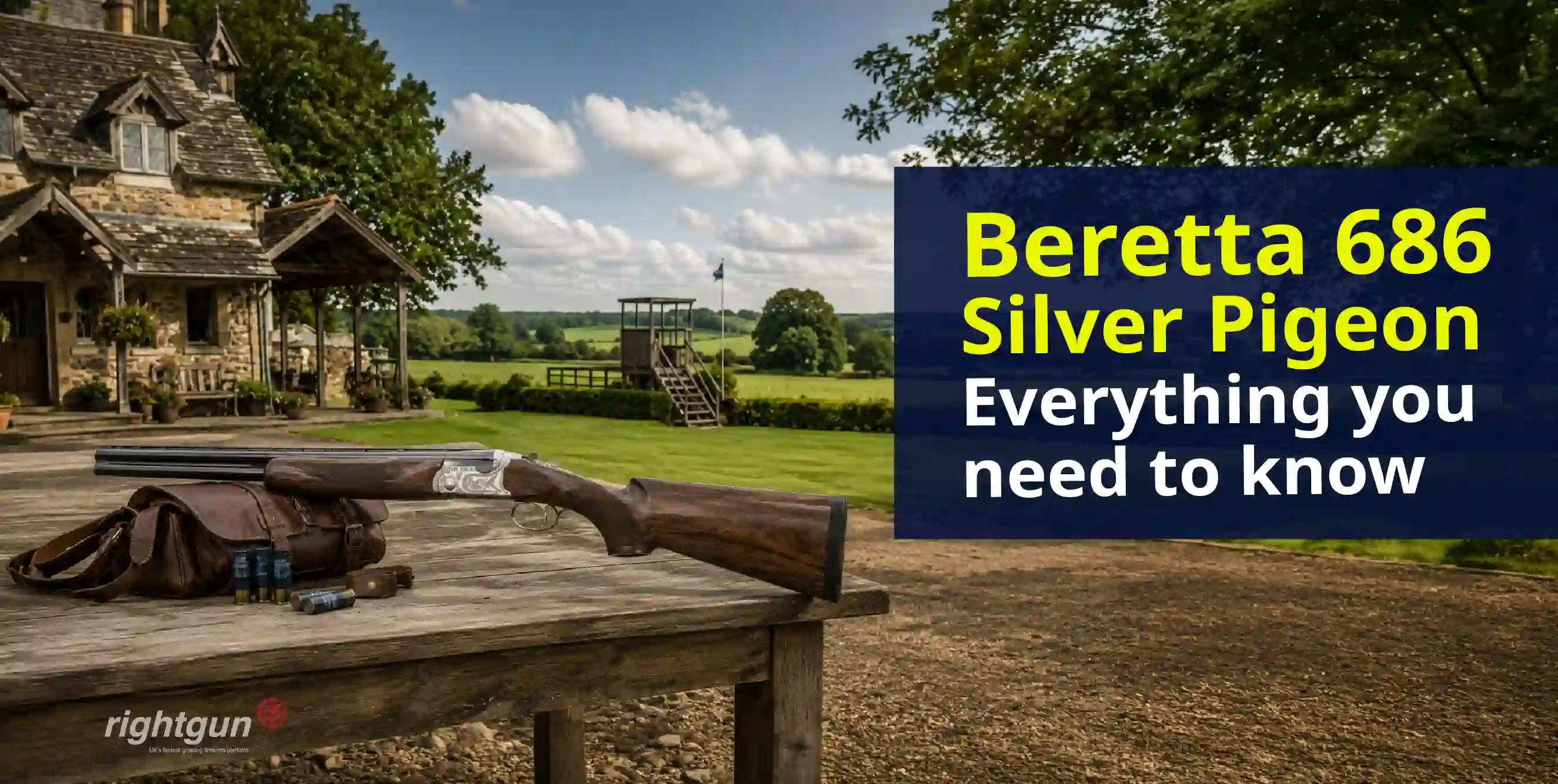
If there is a single shotgun that defines the UK over-and-under market, it is the Beretta 686 Silver Pigeon. Walk into any clay ground or game shoot in Britain, and you will see them everywhere, on the rack, in the cabinet, broken open in the crook of an arm. The Silver Pigeon has earned its dominance not through marketing or fashion but through a combination of reliability, handling, build quality and value that no competitor has convincingly matched over the three decades it has been in production.
This guide covers the different grades and what sets them apart, what to look for when buying second-hand, how the 686 compares with its competition-focused sibling, the 682, and what you should expect to pay at every level of the market.
The Silver Pigeon range: An overview
The Beretta 686 Silver Pigeon is not a single gun; it is a range that spans several grades, each sharing the same fundamental action but differing in finish, wood quality and engraving detail. Understanding the grades helps you target the right specification for your budget and avoid paying Silver Pigeon III money for a Silver Pigeon I.
The Silver Pigeon I is the entry point and the model most people are referring to when they say "Silver Pigeon." It features a low-profile boxlock action with a scroll-engraved receiver finished in a combination of coin silver and blued metal, paired with a walnut stock and forend with machine-cut chequering. The wood is selected rather than premium grade, meaning it is well-figured for the price but not in the same league as higher grades. The SP I is the volume seller and the one you will find most readily on the second-hand market.
The Silver Pigeon III steps up the engraving to a more detailed floral scroll with deeper relief, and the wood is upgraded to a better grade with more pronounced figuring and a finer finish. The action work is the same as the SP I, you are paying for aesthetics rather than mechanical improvement, which is exactly what you would expect from a grade progression in an established platform.
The Silver Pigeon V sits at the top of the range and features game scene engraving with gold inlays on the action, paired with high-grade walnut selected for exceptional figuring and colour. The SP V is a genuinely handsome gun that would not look out of place at a formal driven day, yet underneath the cosmetics, it shares the same proven action as its less decorated siblings.
The action: Why it works
The heart of every Silver Pigeon is Beretta's proven boxlock action, which has been refined across generations of production. The low-profile design keeps the bore axis close to your hands, which contributes to the gun's natural pointability and makes it feel lively in the hands rather than top-heavy. The action locks up via a trunnion system, two prominent lugs on the barrel monobloc engaging with corresponding recesses in the action body, that provides a strong, consistent lockup without the complexity of a sidelock mechanism.
Beretta's ejector system is mechanical rather than spring-loaded, using the force of opening the gun to drive spent cartridges clear. It is reliable, positive and rarely causes problems even after tens of thousands of rounds. The safety catch sits on the tang behind the top lever and can be configured as automatic (engaging when the gun is opened) or manual depending on your preference.
The firing mechanism uses coil springs rather than leaf springs, which gives the action a long service life and consistent trigger pulls. Coil springs do not weaken over time the way leaf springs can, and replacement is straightforward if it ever becomes necessary. The trigger is a single selective unit that allows you to choose which barrel fires first, switchable via a selector button on the trigger guard.
Barrel options and configuration
Silver Pigeons are available in a range of barrel lengths and configurations, and choosing the right one for your intended use is important. For game shooting, 28-inch or 30-inch barrels in 12-gauge are the most popular choices. The 28-inch option is lighter and more manoeuvrable, which suits walked-up shooting and situations where you need to mount and swing quickly. The 30-inch barrel provides a smoother swing and slightly more forward weight, which many shooters prefer for driven game where a steady, sustained swing is more important than snap-shooting speed.
For clay shooting, 30-inch and 32-inch barrels are the norm. The additional length gives a longer sighting plane and more momentum in the swing, both of which help with consistent lead pictures. If you plan to use a Silver Pigeon primarily on clays, the 30-inch barrel is the versatile choice that works across sporting, skeet and trap disciplines. The 32-inch is more specialised and best suited to trap shooting, where you want maximum follow-through.
The Silver Pigeon is also available in 20-gauge, which has become increasingly popular with game shooters who want a lighter, faster-handling gun. The 20-gauge SP I weighs around six pounds, which makes it a delight to carry all day but demands good technique to shoot consistently. If you are considering a 20-gauge, make sure you are comfortable with the reduced weight and narrower patterns before committing.
All Silver Pigeons come with Mobilchoke or Optima-Choke interchangeable choke tubes, depending on the model year. Both systems work well and offer the full range from cylinder through to full. Optima-Choke barrels have a slightly overbored internal dimension that Beretta claims reduces felt recoil and produces more even patterns, though the practical difference is subtle.
Game vs clay configuration
The Silver Pigeon's versatility is one of its greatest strengths, but there are meaningful differences between game and clay-configured models that are worth understanding if you are buying with a specific purpose in mind.
Game-configured Silver Pigeons typically have lighter barrels, a straighter stock, and multichoke systems suited to the open-to-modified range most commonly used in the field. The overall weight is usually between seven and seven and a half pounds in 12-gauge with 28-inch barrels, which keeps the gun lively and comfortable to carry.
Clay-configured models, often designated Sporting, have heavier barrels, a wider rib, and stock dimensions adjusted for a slightly higher point of impact. The additional weight dampens felt recoil during long sessions and provides momentum for sustained swinging. If you want a single gun to cover both game and clays, the Sporting configuration is arguably the better compromise. It is heavier than ideal for a long day in the field, but it handles game shooting perfectly well and gives you an advantage on the clay ground that a lightweight game gun cannot match.
The 682: Competition-focused alternative
The Beretta 682 occupies a different position in the Beretta range, sitting above the 686 as a competition-focused platform that has been the gun of choice for Olympic and World Championship clay shooters for decades. The 682 uses a wider, lower action than the 686, with replaceable trigger groups and a generally heavier, more robust construction designed to withstand the enormous round counts that serious competitive shooters accumulate.
The key differences are weight, trigger quality and durability under heavy use. The 682 is built to fire hundreds of thousands of rounds without significant maintenance, and its adjustable trigger group allows fine-tuning to a degree that the 686's fixed trigger cannot match. For a dedicated competition shooter putting ten thousand or more rounds through their gun every year, the 682's advantages are meaningful. For the vast majority of UK shooters, those who shoot game, shoot clays recreationally, or compete at club level, the 686 does everything the 682 does at a significantly lower price. The 682 is the better gun for serious competition, but the 686 is the better gun for most people.
You can find both the Beretta 686 and 682 models on Rightgun, where listings regularly include both new and second-hand Beretta Silver Pigeon examples.
Buying second-hand: What to check
The Silver Pigeon's popularity means there is always a healthy supply of used examples on the market, ranging from nearly new guns with a few hundred cartridges through them to well-used workhorses with ten years of hard shooting behind them. Knowing what to check helps you sort the good buys from the ones to walk away from.
Barrel wall thickness is the most important measurement on any used over-and-under. Years of cleaning, and occasionally of being re-bored or back-bored can thin the barrel walls to the point where they are no longer safe. Measure the wall thickness at the muzzle using a barrel wall gauge; the minimum acceptable thickness varies by bore, but for a 12-gauge, you want to see at least 0.020 inches (0.5mm) at the thinnest point. If a seller cannot or will not allow you to measure, treat that as a warning sign.
Action face wear shows up as a gap between the breech face and the barrel flats when the gun is closed. A small amount of play is normal on a well-used gun, but excessive movement suggests worn hinge pins or action face erosion. Close the gun and try to rock the barrels gently from side to side; there should be minimal movement. Some play can be taken up by a gunsmith fitting oversize hinge pins, but this is a repair rather than a cheap fix and should be reflected in the price.
Wood condition tells you a lot about how a gun has been cared for. Check the stock for cracks around the head (where it meets the action), dents and scratches on the forend, and signs of refinishing that might be hiding damage. A re-finished stock is not necessarily a problem, but it can mask issues. Look at the chequering; if it has been sanded smooth and recut, the gun has probably seen significant cosmetic work.
Firing pin protrusion should be checked by looking at the strike marks on spent cartridge primers. Even, centred indentations of consistent depth indicate healthy firing pins and springs. Weak or off-centre strikes suggest worn pins or weakened springs, which are inexpensive to replace but worth knowing about before you buy.
Pricing guidance
New Silver Pigeon I models in 12-gauge typically retail from around £1,600 to £1,900, depending on barrel length and the dealer. The SP III commands a premium of several hundred pounds over the SP I, and the SP V sits above £2,500 in most configurations. These are guide prices and will vary between dealers, so shopping around is worthwhile.
On the second-hand market, a clean SP I with modest use, say under five thousand cartridges, typically sells for £1,000 to £1,400. Higher-use examples in good mechanical condition but with cosmetic wear can be found for £700 to £900, and these often represent the best value in the entire UK over-and-under market. An SP III second-hand will usually fetch £1,200 to £1,800, and the SP V holds its value particularly well at £1,800 to £2,500 depending on condition and provenance.
The 682 commands a premium at every level. Used 682 Gold E models in competition trim typically sell for £1,500 to £2,500, and particularly desirable variants such as the Super Sport can exceed £3,000. For a gun you plan to compete with seriously, the 682 repays the premium. For everything else, the 686 Silver Pigeon delivers ninety per cent of the performance at sixty per cent of the price.
Why the Silver Pigeon dominates
The Silver Pigeon's success in the UK is not accidental. It occupies a sweet spot in the market where quality, reliability, handling and price converge in a way that no competitor has consistently matched. The Browning B525 comes closest and is an excellent gun in its own right, but the Beretta's slightly lower action profile and marginally better trigger give it the edge for many shooters. Turkish-made alternatives undercut it on price but cannot match the consistency of Beretta's Italian manufacturing and quality control.
For a gun that will handle game shooting, clay shooting, pigeon decoying and rough shooting with equal composure, that holds its value on the second-hand market, and that can be serviced by any competent gunsmith in the country, the Silver Pigeon is very hard to look past. It is the gun that most UK shooters end up with sooner or later, and very few of them regret the decision.
Read next:
