
 25-Feb-2026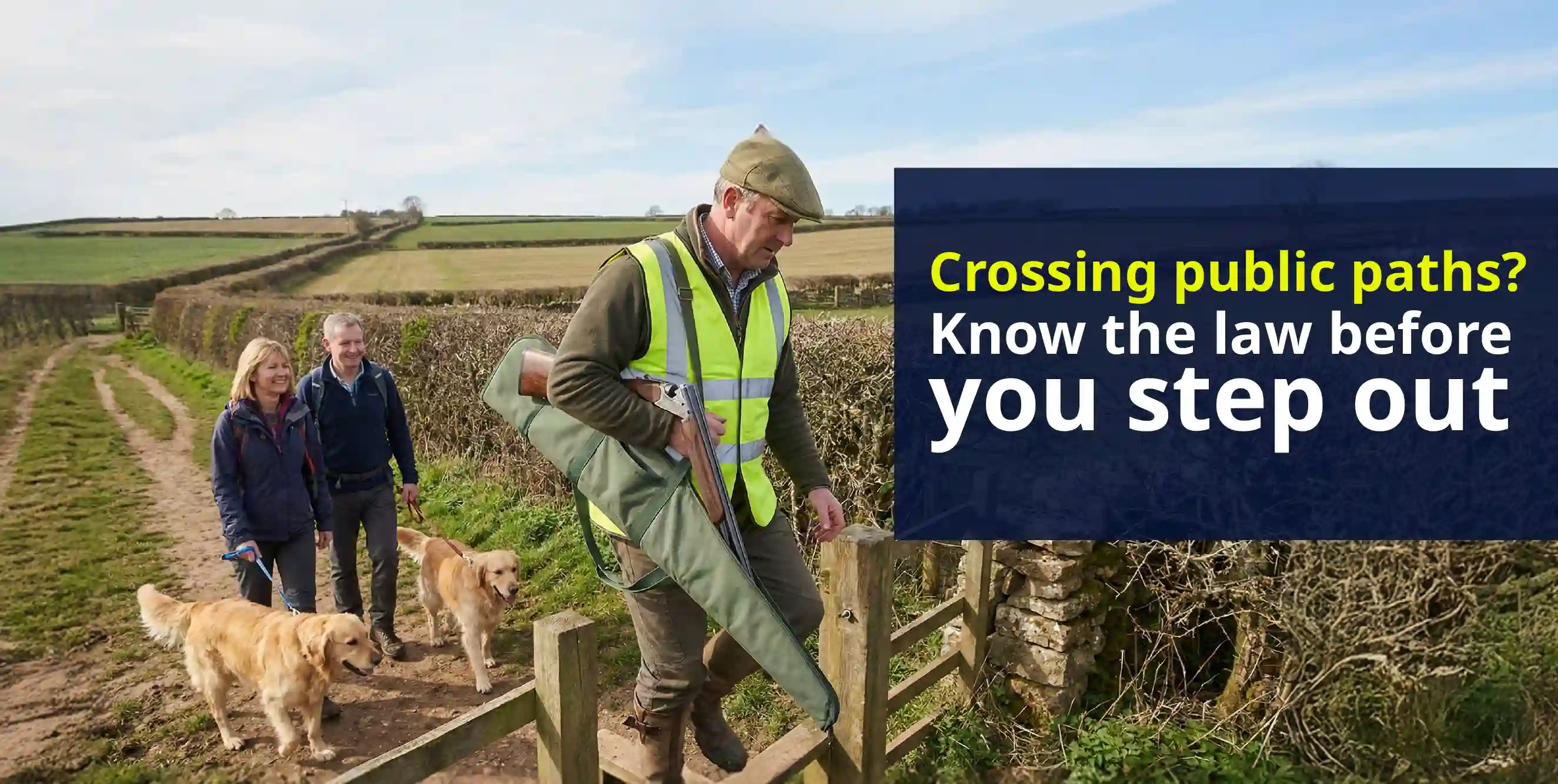
In the UK, where gun laws are some of the strictest globally, hunting with firearms is allowed on private land with permission, but moving between fields separated by public rights of way, footpaths, or roads requires careful adherence to rules on carrying guns in public spaces.
This is governed by the Firearms Act 1968, Highways Act 1980, and related laws, which prioritise safety and prevent alarm. If you're a licensed holder (e.g., with a Shotgun or firearms Certificate) hunting over farms, you can legally transit these areas with a "reasonable excuse" like continuing your shoot, but the gun must be secured properly to avoid offences or police involvement. Always consult local police, BASC, or GWCT for site-specific advice, as terrain and local interpretations vary.
Key principles of UK Firearms Law for hunters
Ownership Requirements: You need a valid Shotgun Certificate (SGC) for shotguns used in hunting. Airguns under power limits (e.g., 12 ft/lb) may not require one in England/Wales, but treat them similarly for safety when crossing public areas.
Public Place Definition Encompasses: Footpaths, bridleways, rights of way, and roads—anywhere accessible to the public, even if crossing private farms.
Reasonable Excuse Essential for carrying: Hunting across permitted fields qualifies if you're en route between shoot sites. The gun must be unloaded and covered; without this, it's an offence, and you will most probably lose your licence.
Rules for crossing public paths or rights of way on foot
You can carry a shotgun across footpaths or bridleways if it's unloaded, broken (if applicable), and fully covered in a slip or case to avoid visibility and alarm. This applies when moving between fields on the same farm or adjacent ones where you have shooting rights—it's seen as part of your legitimate activity under Section 19.
While carrying is fine, discharging within 50 feet (15.24 metres) of a vehicular highway's centre is illegal without excuse (Highways Act 1980). Individual roads are typically 3.65m wide which means you must be 11.59 metres away from the road edge. To help you gauge this, it is roughly the length of a Telephone Pole or London Double-Decker Bus.
For non-vehicular paths like footpaths, you can shoot over them if safe and you have land rights, but pause if walkers are present to prevent accidents or complaints.
Airguns in Hunting has Similar rules, make sure you are unloaded and covered when crossing roads, loaded in public is an offence. Treat as firearms for discretion.
Rules for crossing public roads (on foot or in a vehicle)
If you're on foot walking across roads, then the gun must be unloaded, covered, and carried discreetly. Crossing a road between fields counts as a reasonable excuse if part of your hunt, but avoid brandishing to prevent public concern.
If you're in a vehicle, driving between farms or fields via public roads, store the gun unloaded, out of sight (e.g., in the boot or locked case), separate from ammo, and inaccessible from the driver's seat. Never leave unattended; remove bolts or forehand if needed for security.
Police Officers can search vehicles under Section 47 if suspicious. Show your certificate and explain your hunt route calmly.
Penalties for breaches
If you're carrying Without Excuse or Improperly you can serve up to 5 years imprisonment for firearms; shorter for airguns.
If you discharge a firearm near a road, then you can receive fines or up to 6 months in prison for unsafe shooting near roads and in all cases, you will lose your certificate and your guns will be seized.
Advice for hunters to avoid police calls
Hunting in the UK, particularly on permitted land like farms or estates, can be a rewarding pursuit for licensed shooters, but it often involves navigating areas near public rights of way, footpaths, or roads.
While UK firearms laws allow shooting with proper certificates and landowner permission, visible guns or gunfire can alarm the public, leading to police reports.
Always confirm you have written or documented permission from the landowner for the specific land, detailing boundaries, allowed quarry, and any restrictions. Shooting without this, even accidentally straying off-site, can escalate to poaching charges and trigger police action.
Any public interaction (e.g., crossing paths) requires guns to be unloaded and concealed to avoid offences. Even on private land, proximity to public areas means sounds or sights of shooting can prompt calls. One essential step to avoid overreactions like armed response teams or helicopters is notifying the police beforehand. Before commencing your shoot on permitted land, call the non-emergency line on 101 to inform them of your licensed activities. Provide key details such as the exact location (e.g., farm name, postcode, or grid reference), the time frame, and a brief description of the group size or purpose (e.g., pest control or game shooting). This logs your session officially, allowing police to cross-reference any public reports and verify it's authorised, often resolving issues without dispatch.
Effective dialogue is crucial for hunts on permitted land. Reconfirm permission with the landowner ahead of time and inform neighbouring residents or frequent users of nearby public paths about your plans, including dates and approximate times. This transparency builds community trust and reduces surprises from gunfire echoes. When on the land, if crossing internal boundaries near public areas, wear high-visibility clothing to identify yourself as a responsible hunter, but always keep guns fully concealed in slips or cases to prevent visual alarm.
Also read:
