
 12-Nov-2026
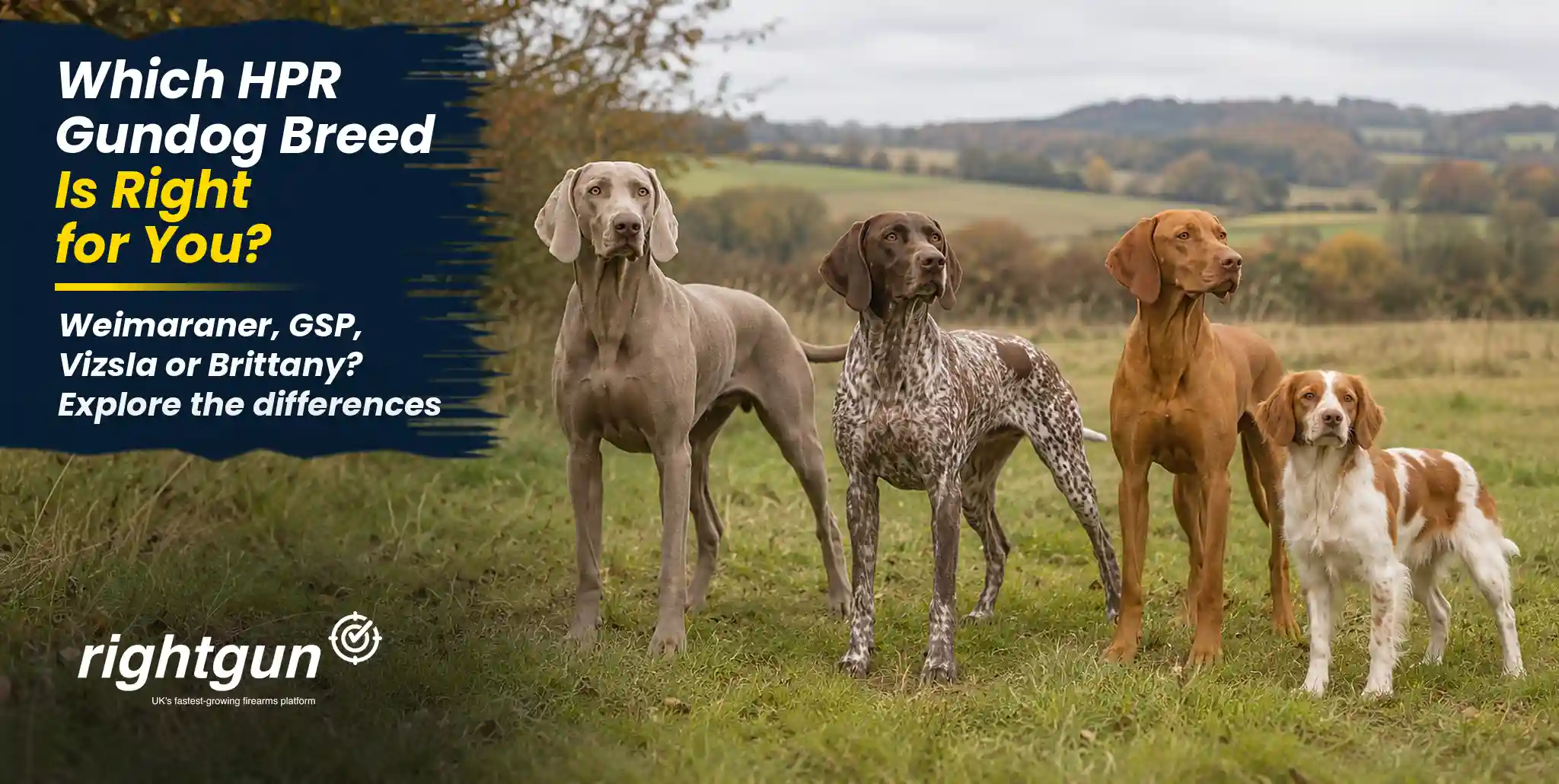
If you have spent a season watching Spaniels and Labradors work, you may have noticed another kind of gundog quietly doing something different. It ranges out ahead, locates game by scent, freezes on point and then, when the shot is taken, goes and brings the bird back. That is the hunt, point, retrieve dog, usually shortened to HPR, and it has a growing following among UK rough shooters, walked-up game shooters and pigeon and wildfowl enthusiasts who want one dog to do several jobs.
Choosing between the breeds is not easy, and the wrong choice can be frustrating for both of you. This guide compares the HPR breeds you are most likely to meet in the UK and explains who each suits. We have kept the advice general, because individual dogs vary enormously and a good breeder or trainer will always know more than a general guide.
What is an HPR, and is it right for you?
An HPR is a versatile breed developed on the Continent to do the work of a pointer, a flushing dog and a retriever in one. For the right owner, that versatility is the appeal. Instead of keeping a spaniel for the beating line and a Labrador for the peg, you can train a single dog to do a bit of everything on a rough shoot.
The trade-off is that HPRs are generally energetic, intelligent and sensitive, and they thrive on work. They suit owners who can give them plenty of exercise, consistent training and a real job. If you only shoot a handful of days each season and want a quiet dog for the sofa, a more relaxed breed may suit you better.
Browse: Dog equipment · Daktari dog products · Shotguns · Thermal and optics · Torches
German Shorthaired Pointer (GSP)
The German Shorthaired Pointer is probably the most widely seen HPR in UK shooting circles. It is athletic, keen and very versatile, and it takes naturally to pointing, tracking and retrieving. A good GSP can work on fur and feather, cover a lot of ground and bring game back to hand.
That drive comes with a need for exercise and occupation. A bored GSP can become a handful, so it suits active owners who will train regularly and give it plenty of purposeful work. For the rough shooter who wants a do-it-all dog with real stamina, it is often the first breed that comes to mind.
Browse: Dog equipment · Daktari dog products · Shotguns · Torches · Knives
Weimaraner
The Weimaraner is the instantly recognisable silver-grey HPR, and it is a striking dog in the field. Weimaraners are known for being intelligent, bold and strongly attached to their owners. They can be superb all-round working dogs, but they tend to want to be involved in everything you do and do not always cope well with being left alone.
Weimaraners usually reward owners who invest time in early training and socialisation. They are not the easiest breed for a first-time gundog owner, but in experienced hands they make capable and loyal shooting companions.
Browse: Dog equipment · Daktari dog products · Shotguns · Knives · Torches
Hungarian Vizsla
The Vizsla is a rust-coloured, lighter-framed HPR with a reputation for being affectionate, sensitive and very people-focused. Vizslas are often described as velcro dogs because they like to stay close, and they respond best to patient, gentle training rather than a heavy hand.
In the field, they are elegant, fast and keen workers, with a particular talent for covering open ground. They suit owners who can offer plenty of company and a calm, positive approach. If you want a close, affectionate shooting partner, a Vizsla is worth meeting before you decide.
Browse: Dog equipment · Daktari dog products · Shotguns · Torches · Thermal and optics
Brittany
The Brittany is a smaller, compact breed that combines a keen nose with a lively temperament. Brittanys are popular with rough shooters who want a manageable dog that can work tight cover and still handle a day of walking. Their size makes them easier to live with in a smaller home or to fit into a car.
They are energetic and sensitive, so they need regular exercise and calm, consistent handling. For shooters who want an HPR without the larger frame of a Weimaraner or GSP, the Brittany deserves serious consideration.
Browse: Dog equipment · Daktari dog products · Shotguns · Knives · Torches
How to choose, and what kit you will need
Matching a breed to your life matters more than picking the one that looks best in photographs. Think honestly about how many days you will shoot, how much time you can give to training and exercise, and whether the dog will live in the house or a kennel. Speak to breeders and to people who work these dogs, ask about health testing, and spend time around the breed before you commit.
Whichever you choose, a few things are worth getting right from the start: a sturdy lead and a whistle, a training aid suited to the stage you are at, a first aid kit for the field, and something to dry the dog at the end of the day. Our guides to choosing a gundog puppy and dog first aid are a sensible place to start.
Browse: Dog equipment · Dog first aid kit · Puppy training pack · Dog towelling coat · Daktari dog products
Training and your first season
Whichever breed you choose, the first year is about foundations rather than game. Start with the basics at home: name recognition, a reliable recall, walking on a lead and settling calmly. Introduce the whistle early and keep sessions short and positive, because HPRs are sensitive dogs that can switch off if training turns into a battle.
Socialisation matters just as much. Let your puppy meet other dogs, hear gunfire at a distance in a controlled and gradual way, and experience different ground, livestock and weather. Rushing a young dog into a busy shoot day is one of the most common ways to undo good early work. Many owners join a local gundog training club or work with a professional trainer, and those who do usually find the investment repays itself many times over.
In your first season, keep expectations modest. A few quiet days on a rough shoot, where the dog can work close to you and make mistakes without causing a problem, will teach it far more than a single big day. Pace yourself, enjoy the progress, and remember that most HPRs do not reach their full potential until they are two or three years old.
Browse: Dog equipment · Puppy training pack · Daktari dog products · Torches · Gun parts and accessories
Frequently asked questions
What does HPR stand for? It stands for hunt, point, retrieve. HPR breeds were developed to find game, indicate it and bring it back, which makes them versatile on a rough shoot.
Which HPR is best for a first-time gundog owner? There is no single answer, as individual dogs and handlers vary. Many first-time owners find more biddable, people-focused breeds easier, but a good breeder and a trainer are worth more than any generalisation about breed.
Can an HPR work in a beating line or on a driven day? Some can, but they are generally happiest on walked-up and rough shooting, where they can use their range and nose. Driven days often suit steady retrievers and spaniels better.
How much exercise does an HPR need? A lot. Most need substantial daily exercise and mental stimulation. If you cannot provide it, another breed may be a better match.
Kit for you and your dog
A good working dog is only one part of a shooting day. You can browse dog equipment, shotguns, optics and other shooting essentials on Rightgun.uk. If you have kit you no longer use, listing it takes a few minutes and puts it in front of UK buyers who are already searching.
Further reading: Hunting dogs, Gundogs, Choosing a gundog puppy, Dog first aid and Hunting boots.
