
 15-Jul-2026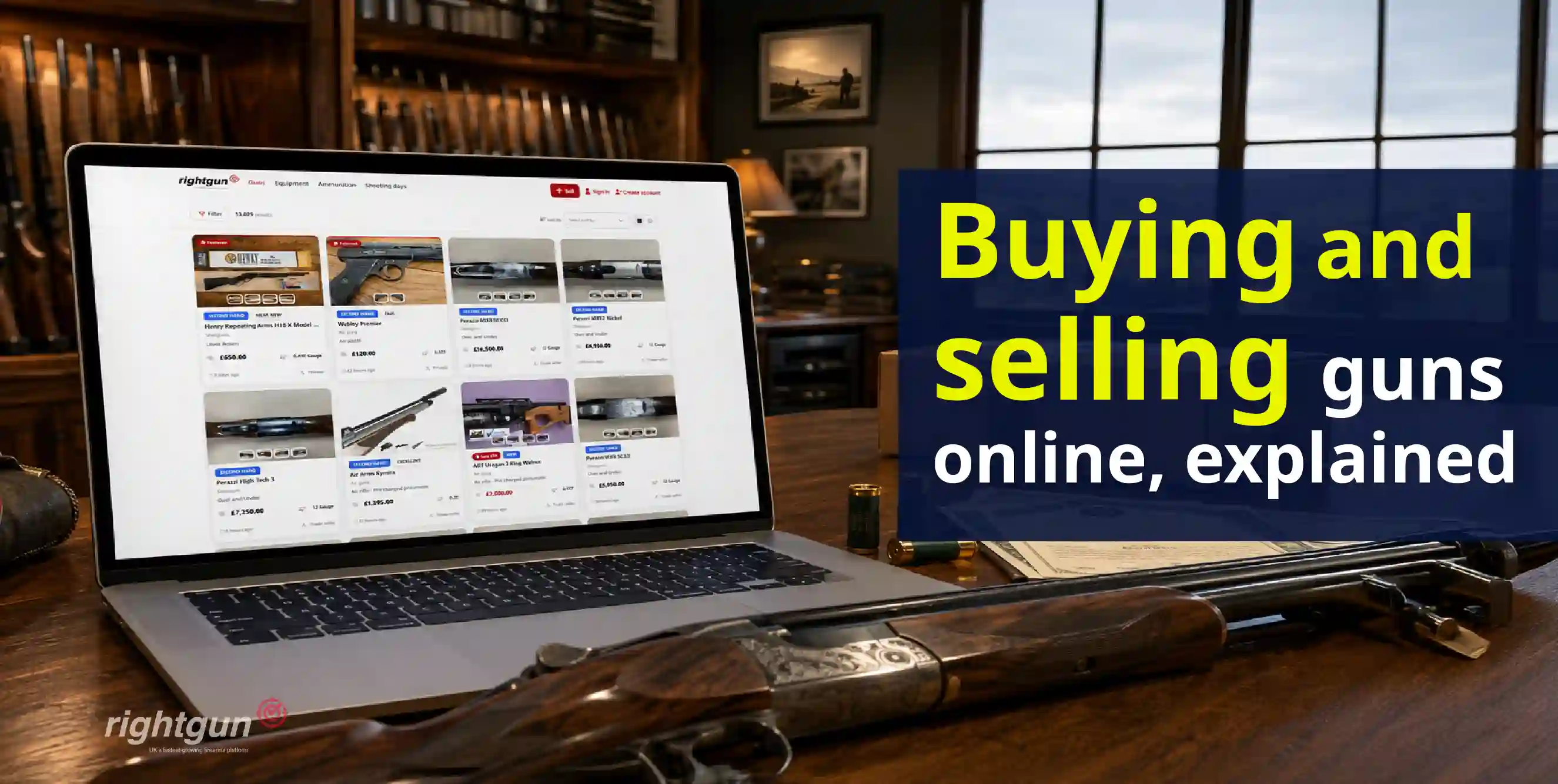
The days of finding your next gun exclusively through word of mouth, small ads in the back of a magazine, or a Saturday morning browse at the local dealer are not entirely over, but the UK firearms market has moved decisively online. Whether you are looking to buy your first shotgun, sell a rifle you no longer use, or find a specific make and model that your local shop does not stock, the internet has transformed how guns for sale in the UK are found, compared and purchased.
But buying and selling firearms online in this country is not the same as listing a bicycle on a classifieds site. There are specific legal requirements, practical considerations, and potential pitfalls that every buyer and seller needs to understand. This guide covers the entire process from start to finish: the law, the platforms, how to create listings that sell, what to watch out for as a buyer, and how to transfer firearms legally and safely.
The legal framework
Every firearms transaction in the UK is governed by the Firearms Act 1968 and its subsequent amendments. The fundamental principle is simple: you cannot possess a firearm or shotgun without the appropriate certificate, and every transfer of a firearm must be conducted lawfully with both parties holding valid documentation. This applies equally to face-to-face transactions and those arranged online.
For Section 2 shotguns, standard shotguns with a non-detachable magazine incapable of holding more than two cartridges, you need a shotgun certificate. The buyer's certificate must have space for an additional gun (or the transaction must be a one-for-one replacement), and both parties must notify the police of the transfer within seven days. Private sales of Section 2 shotguns between certificate holders are legal and do not require an RFD to be involved, though many buyers and sellers prefer to use one for convenience and peace of mind.
For Section 1 firearms, rifles, pistols held on section 7 or 5 authority, pump-action and semi-automatic shotguns, and any other firearm requiring a firearms certificate, the rules are tighter. The buyer must have the specific type and calibre of firearm listed as a permitted acquisition on their certificate before the transfer can take place. In practice, this means you need to have your variation approved by the police before you can legally take possession of a Section 1 firearm.
If either party is unsure about the legal requirements, the safest course of action is to conduct the transfer through a Registered Firearms Dealer (RFD). An RFD can verify both certificates, handle the paperwork, and ensure everything is recorded correctly. Most charge a modest fee for this service, typically £20 to £50, and it eliminates any risk of an inadvertent breach of the regulations.
Major platforms compared
Several platforms serve the UK gun trader market, each with its own strengths, audience and fee structure. Understanding the differences helps you choose the right platform for what you are buying or selling.
The traditional gun trader websites have been the backbone of UK online firearms sales for years. These established platforms carry large volumes of listings from both private sellers and dealers, and their search tools allow you to filter by type, make, model, calibre, price and location. They attract the largest browsing audience, which means your listing gets maximum exposure. The trade-off is that these platforms charge listing fees or subscription packages, and the sheer volume of listings means competition for buyer attention is fierce.
Dealer websites and social media groups also play a role. Many RFDs maintain their own stock listings online, and Facebook groups dedicated to UK shooting regularly feature guns for sale, though the platforms' policies on firearms content can make this an unreliable channel. Auction houses, both physical and online, handle higher-value and collectable firearms, and offer a different dynamic where competitive bidding can drive prices above what you might achieve in a private sale.
Rightgun has entered this market with a focus on making the process of finding firearms for sale straightforward and transparent. The platform aggregates listings and provides clear search and filtering tools that help buyers find exactly what they are looking for without trawling through irrelevant results. For sellers, it offers exposure to a growing audience of serious UK shooters. Whether you are looking for shotguns, rifles or air rifles, the ability to search by make, model and price range makes the process considerably more efficient than browsing general-purpose platforms.
Creating listings that sell
If you are selling a gun online, the quality of your listing directly affects how quickly it sells and what price you achieve. A lazy listing with a single dark photograph and a two-line description will attract lowball offers and time-wasters. A well-crafted listing attracts serious buyers who are willing to pay a fair price.
Photography is the single most important element. Take clear, well-lit photographs against a plain background. Shoot in natural daylight rather than under artificial light, and photograph the gun from multiple angles: full length from both sides, close-ups of the action and engraving, the underside of the forend, the muzzles (so buyers can see the bore condition), any wear points, and any damage or imperfections. Honesty in photographs builds trust and prevents disputes after sale. If the stock has a dent, photograph it. If the blue is worn on the action edges, show it. Buyers expect used guns to show wear, and they respect sellers who present it transparently.
Your description should cover the key facts without padding. Include the make, model, gauge or calibre, barrel length, chokes (fixed or multichoke, and what tubes are included), stock dimensions (length of pull, drop at comb and heel if you have them), approximate round count or condition rating, and any accessories included, such as a case, snap caps or spare choke tubes. Mention any work that has been done, re-blacking, stock refinishing, trigger work, and note the gun's provenance if it adds value. A gun from a known shooting estate or with documentation carries more weight than one with no history.
Pricing is where many sellers go wrong. Research what similar guns are selling for on the major platforms before setting your price. Look at sold listings, not just current ones, because asking prices do not always reflect market reality. Price your gun competitively and you will sell it quickly. Price it optimistically, and it will sit on the platform for weeks, accumulating the stigma of a stale listing that buyers assume nobody else wanted.
Spotting red flags as a buyer
The UK firearms market is overwhelmingly populated by honest, law-abiding sellers, but common sense still applies when buying online. There are several warning signs that should make you pause before committing.
A seller who is reluctant to provide clear photographs or who makes excuses about why they cannot show certain parts of the gun may be hiding damage or misrepresenting the condition. Any reasonable seller should be willing to send additional photos on request and to answer specific questions about wear, function and history. Prices that seem too good to be true usually are, if a gun is listed significantly below market value with no explanation, it is worth asking why before assuming you have found a bargain.
A seller who pressures you to complete the transaction quickly, demands unusual payment methods, or wants to skip certificate verification is a seller to walk away from. Legitimate firearms transactions are not conducted in a hurry. Finally, insist on seeing the gun before committing if at all possible. If distance makes a viewing impractical, consider having the gun sent to your local RFD for inspection before you finalise the purchase.
Face-to-face vs RFD transfer
When you have agreed a sale, the transfer itself can happen in one of two ways: face-to-face between certificate holders, or through an RFD acting as intermediary.
A face-to-face transfer is the simplest route for Section 2 shotguns. Both parties meet, verify each other's certificates, complete the transaction, and each notifies their respective police force within seven days. Both parties should record the certificate number, name and address of the other party, along with the serial number of the gun and the date of transfer. Some shooters carry pre-printed transfer forms for this purpose, which makes the paperwork straightforward.
An RFD transfer involves sending the gun to a dealer, who inspects it, verifies the buyer's certificate, and releases the gun once everything is confirmed. This is mandatory for Section 1 firearms purchased from a private seller who is not an RFD, and it is strongly recommended for Section 2 shotguns when buyer and seller cannot meet in person. The RFD charges a handling fee and may also charge storage if the buyer does not collect promptly, so agree these costs upfront.
For transactions arranged online where the buyer and seller are in different parts of the country, the RFD route is typically the most practical option. The seller ships the gun to the buyer's nominated RFD, the buyer collects it once the paperwork is in order, and both parties have the reassurance that a professional has overseen the transfer.
Shipping firearms legally
Sending a gun by post or courier in the UK is legal, provided certain conditions are met. The gun must be unloaded, securely packaged, and sent by a method that requires a signature on delivery. Royal Mail will carry firearms, but many sellers prefer specialist courier services that understand the requirements and offer appropriate insurance cover.
The packaging must be discreet; there should be no external indication that the parcel contains a firearm. Use a sturdy gun case inside an outer box with plenty of padding, remove detachable parts and pack them separately, insure the shipment for its full value, and send the tracking number to the buyer. The gun should be sent directly to the buyer (for Section 2 shotguns between certificate holders) or to the nominated RFD (for Section 1 firearms or when using a dealer as intermediary). Never send a firearm to an address where there is nobody with a valid certificate to receive it.
Selling a collection
Selling a single gun is straightforward. Selling an entire collection, whether through downsizing, retirement, bereavement or change of circumstances, requires more thought. Listing ten or twenty guns individually on multiple platforms is a significant undertaking, and the time required to photograph, list, correspond with buyers, arrange viewings and handle transfers can stretch over months.
The alternative is to sell through a dealer, either on consignment or as a bulk purchase. An RFD buying a collection outright will typically offer fifty to sixty per cent of what you might achieve selling privately, but the convenience of a single transaction is considerable. Consignment usually achieves better prices but takes longer. Auction is a third option for collections that include valuable, rare or historic firearms, with commission rates typically ten to fifteen per cent of the hammer price. Whichever route you choose, maintain clear records of every sale, including buyer details, certificate numbers, serial numbers and dates.
Private sale vs Trade-in pricing
Understanding the gap between private sale prices and trade-in offers is essential. A dealer will typically offer fifty to seventy per cent of their expected retail price, because they need margin to cover costs, overheads and profit. Private sale cuts out that margin but means you do all the work. For common guns in the mid-price range — the Beretta Silver Pigeons and Browning B725s of the world, the private sale market is active and you should sell within a few weeks at a fair price. For niche or high-value items, a dealer or auction house may actually achieve a better result because they have access to the right buyers. Rightgun can help you understand what your gun is worth by providing access to current market listings and comparable sales data.
How Rightgun fits in
Rightgun was built to make searching for guns as intuitive as searching for anything else online. The platform brings together listings from across the UK, with search and filtering tools that let you drill down by type, make, model, calibre, price range and location. For buyers, this means less time scrolling through irrelevant listings. For sellers, it means exposure to a focused audience of serious UK shooters actively in the market.
Whether you are looking for your first shotgun, upgrading your stalking rifle, or selling a gun that no longer gets the use it deserves, the online marketplace is where the UK firearms trade increasingly happens. Understanding how it works, what the law requires, and how to present yourself well as a buyer or seller puts you in the strongest possible position.
Read next:
