
 15-Oct-2026
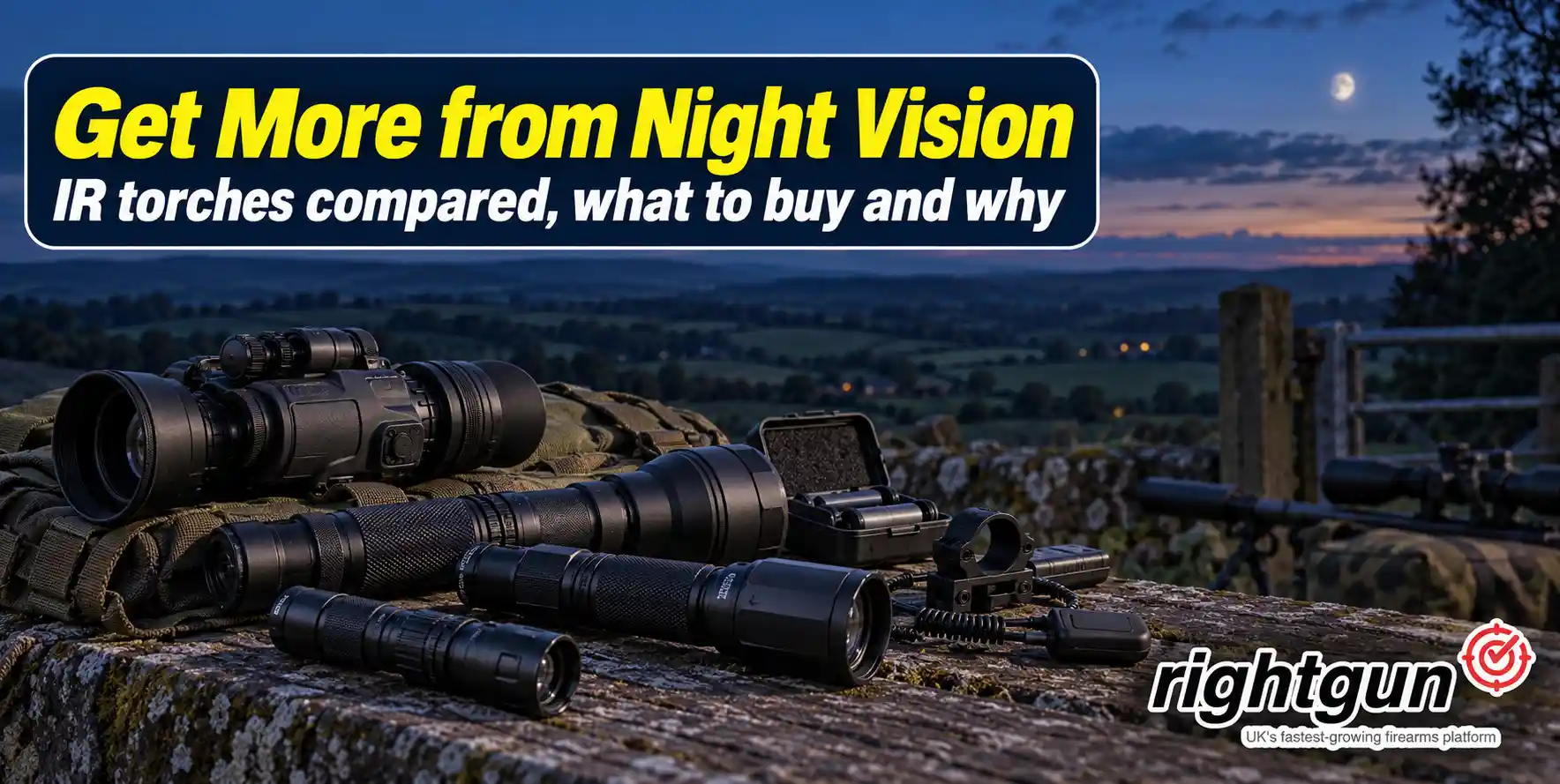
A night vision scope or monocular is only as good as the light it has to work with. On a moonless night in a Wiltshire field or a Scottish glen, a digital night vision unit may show you little more than grain until you add an infrared torch. That is why “best IR torch for night vision” is one of the most searched kit questions among UK pest controllers and night-time hunters, and why so many people get it slightly wrong.
This guide explains what an IR torch actually does, what to look at when you compare them, and how to think about budget. We do not quote prices, because they move around and used equipment varies widely. Instead we group the market into sensible bands so you can see where your money goes, then point you to live listings.
What an IR torch does (and when you do not need one)
Many night vision units are digital. They gather available light and amplify it, but when there is very little to amplify, the picture gets noisy and flat. An infrared illuminator adds a beam of light that is invisible, or close to invisible, to the human eye but bright to the sensor. The result is a cleaner, more contrasty image at range.
Thermal imagers work differently. They read heat rather than light, so they do not need an illuminator at all. If you are choosing between the two technologies, our comparison of thermal vs night vision scopes explains the trade-offs, and the thermal and night vision scopes by budget roundup shows where each fits.
For anyone who has chosen digital night vision, though, the torch is not an optional extra. It is half of the system, and a good one transforms what a mid-range unit can do.
Browse: Torches · Thermal and optics · Hikmicro · Pulsar · InfiRay
Wavelength: 850nm or 940nm?
The first decision is wavelength. Most illuminators sold for hunting use either 850nm or 940nm, and each has its place.
An 850nm torch is generally brighter to a night vision sensor and gives better range and image quality, but it can produce a faint red glow at the emitter that may be visible if you look straight at it. A 940nm torch is dimmer to the sensor, so range and clarity are reduced, but it is effectively invisible to the eye. Which suits you depends on how close you expect to be to your quarry, what your sensor responds to, and how much compromise you will accept.
Check your night vision unit’s specifications and recommended illuminator wavelength before you buy. A torch that is a poor match for your sensor will always disappoint, however much it costs.
Browse: ATN IR850 torch · Hikmicro IR torch · Torches · ATN sights · Pulsar sights
The features that matter when you compare
Spec sheets can be overwhelming, so focus on the handful of things you will notice every time you use the torch.
Beam control comes first. An adjustable beam lets you widen the spread to scan a field and narrow it to reach out at a target. A fixed beam is simpler but less versatile. Next is output control: being able to turn the power down avoids washing out the image on close objects and saves battery.
Mounting and build quality matter too. A torch that fits a rail, sits securely and survives knocks is worth far more than a bargain that rattles loose. Weatherproofing is essential for British conditions, and so is a switch you can operate with gloves on.
Finally, think about power. Rechargeable batteries are convenient but check run time and whether you can carry spares. Be sceptical of dramatic range claims: real-world performance depends on your sensor, the terrain, weather and background, so treat manufacturer figures as a guide rather than a promise.
If you want to see how one popular model performs in practice, our Dark Engine Blade IR illuminator review is a good starting point.
Browse: Hikmicro IR torch · Torches · Gun parts and accessories · Pulsar · Zeiss
Choosing by budget
Entry-level illuminators are the place to start if you already own a basic night vision unit and want to extend its usefulness. Expect simpler construction, a fixed or lightly adjustable beam and a more modest battery. Used examples can be excellent value if they have been looked after, but test the beam and battery before you buy.
Mid-range torches usually bring adjustable focus, better output control, sturdier housings and more reliable mounting. For most UK users, this is where the sensible money goes. You get a meaningful jump in usable range and image quality without paying for features you will not use.
Premium options offer the best build, the cleanest beam and the strongest output, and they suit people who spend many nights a year in the field. The important rule across all three bands is to buy for your sensor, not for the biggest number on the box. A properly matched mid-range torch will beat a mismatched premium one.
If you are also planning to pair the torch with a lamp for conventional lamping, see our guide to the best hunting torches for lamping.
Browse: Torches · Hikmicro IR torch · Thermal and optics · Hikmicro sights · Leupold sights
Buying used: What to check
A second-hand IR torch can be a bargain, but it deserves a proper look. Switch it on and check the emitter for even output with no dark patches. Work the focus mechanism through its full range, and make sure the switch and any remote lead feel solid. Inspect the housing for cracks and the seals for damage, since water ingress is the commonest failure.
Ask about battery condition and what is included: chargers, mounts, and cables add real value. Where possible, try the torch with your own night vision unit, because compatibility matters more than any rating. And buy from a seller who can tell you how the torch was used and stored.
Browse: Torches · Thermal and optics · Gun parts and accessories · Safes and cabinets · Pulsar
Frequently asked questions
What is the best IR torch for night vision?
It depends on your unit. The best torch is one that matches your sensor’s wavelength, offers an adjustable beam and has a robust mount. Pair it with your night vision rather than chasing the biggest range figure.
Do I need an IR torch with a thermal scope?
No. Thermal imagers detect heat, so they work without any added light. An IR torch is for digital night vision, which relies on light to build its picture.
Is 850nm or 940nm better?
850nm is brighter to the sensor and usually gives a better image and range, though it may show a faint red glow. 940nm is effectively invisible but gives up some performance. Choose based on your unit and how you hunt.
Can I buy a second-hand IR torch?
Yes. Test the beam, focus and battery, inspect for water damage and, ideally, try it with your own night vision first.
Find your next IR torch
Browse torches and night vision kit on Rightgun.uk, compare listings from sellers across the UK and filter by make and condition. Got kit you no longer use? List it with us and reach buyers who are searching for exactly this equipment.
Further reading: Dark Engine Blade IR illuminator review, Thermal vs night vision scopes, Best thermal and night vision scopes by budget and Best hunting torches for lamping.
