
 05-Dec-2025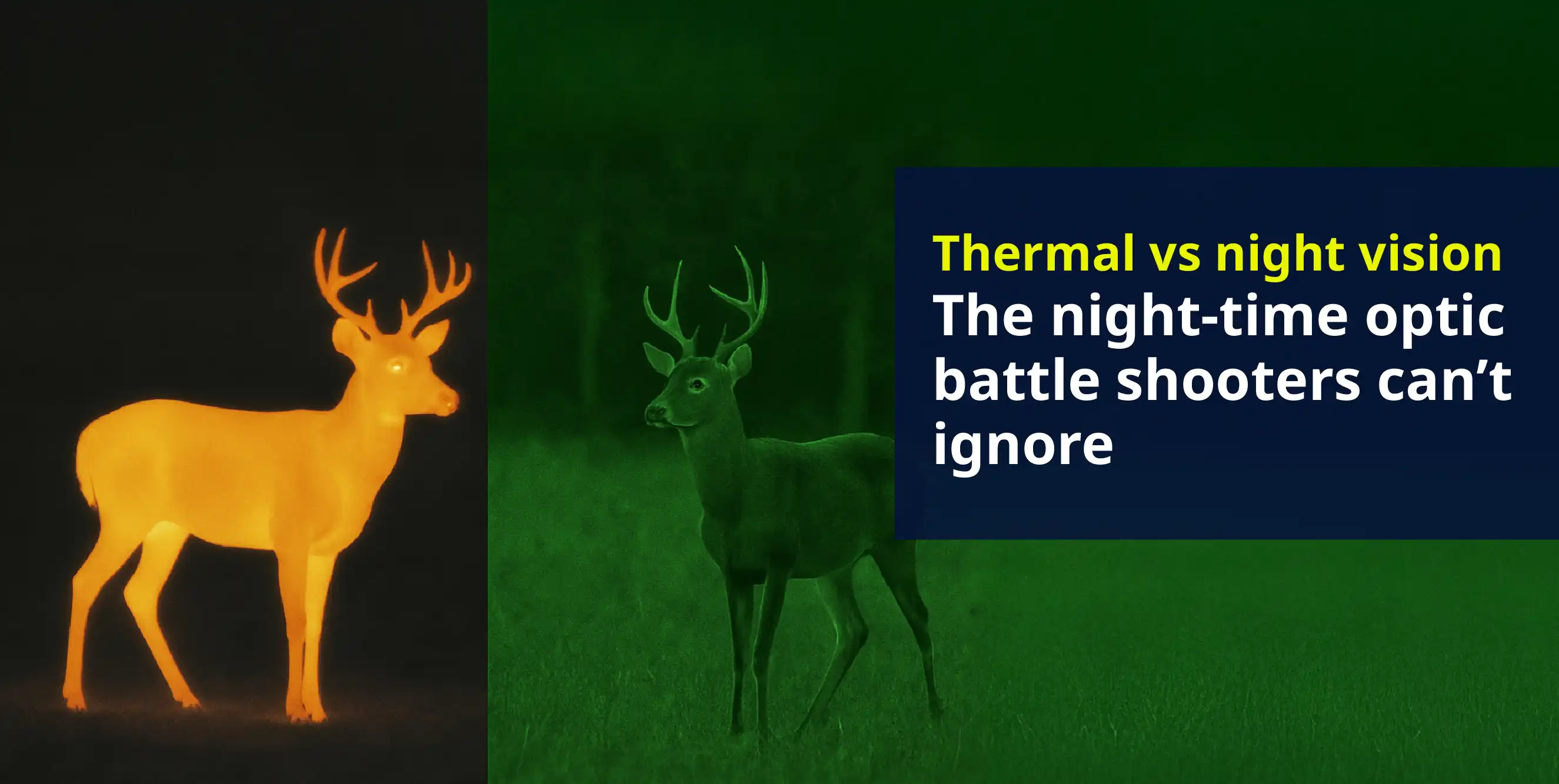
When it comes to shooting or spotting targets after dark, choosing the right optic can make all the difference. Both thermal scopes and night vision scopes offer powerful advantages for nighttime use, but they work in completely different ways. The question most shooters ask is: which performs better at night — and how do weather conditions affect performance?
In this guide, we’ll compare thermal imaging vs night vision, explain how each technology works, and help you decide which is best for your needs in UK conditions.
How thermal scopes work
Thermal scopes detect heat signatures rather than light. Every object emits infrared radiation based on its temperature, and a thermal scope translates that radiation into a visible image.
This means that thermal scopes:
Don’t rely on visible light or infrared illumination.
Can “see” through darkness, fog, light brush, and some levels of smoke.
Highlight living targets such as animals or people with clear contrast, even in pitch-black conditions.
Thermal optics are ideal for spotting wildlife, detecting heat leaks, or identifying game hidden by foliage or shadows.
How night vision scopes work
Night vision scopes, on the other hand, amplify existing light (moonlight, starlight, or IR from an illuminator) to create a visible image.
There are several generations of night vision technology:
Gen 1 – Affordable and entry-level, but with limited clarity and range.
Gen 2 – Better resolution and brightness.
Gen 3+ and Digital NV – Crisp detail, longer range, and great performance in near-dark conditions.
Night vision provides a realistic view of your surroundings, showing details like terrain, trees, and obstacles — something thermal can sometimes struggle with.
Weather impact on thermal vs. night vision scopes:
Clear nights
• Thermal: Excellent heat contrast
• Night Vision: Excellent visibility with strong light amplificationFog & mist
• Thermal: Good visibility through thin fog
• Night Vision: Poor clarity due to scattered lightRain
• Thermal: Fair — heavy rain may distort images
• Night Vision: Fair — IR reflection reduces sharpnessCold weather
• Thermal: Excellent — warm targets stand out immediately
• Night Vision: Good — remains clear with ambient lightHumid / Warm conditions
• Thermal: Reduced contrast as everything emits similar heat
• Night Vision: Good — temperature doesn’t affect visibilitySmoke / Dust
• Thermal: Good through light smoke or dust
• Night Vision: Poor — reflections cause blooming and blur
Thermal vs night vision: Which performs better at night?
If your goal is detection, thermal scopes generally outperform night vision. They make it easy to spot living targets in total darkness, behind brush, or in foggy weather.
However, if your goal is identification — knowing whether you’re looking at a rabbit, fox, or something else — night vision gives a clearer, more detailed image of your surroundings.
In short:
• Thermal = Best for spotting.
• Night Vision = Best for identification and situational awareness.
Practical use for UK shooters
In the UK, the weather can change quickly — fog, drizzle, and damp air are common. For pest control, foxing, or wildlife observation, many shooters now choose thermal scopes for their ability to detect heat signatures regardless of light.
That said, digital night vision remains a cost-effective and reliable option, especially if you often shoot in open fields under moonlight.
Many UK shooters even combine the two: using thermal monoculars for scanning and night vision scopes for taking the shot.
Final verdict
Both technologies have their place, but here’s a quick summary:
Choose a Thermal Scope if you need:
Total darkness performance
Reliable detection in fog, rain, or brush
Quick target acquisition for pest control
Choose a Night Vision Scope if you want:
Natural-looking images and clearer identification
Lower cost entry point
Dependable use with IR illumination
Ultimately, your shooting style, environment, and budget will decide which is best.
At Rightgun.uk, we stock a wide range of thermal scopes and night vision optics from leading brands such as Pulsar, HIKMICRO, and ATN. Whether you’re upgrading your night shooting setup or choosing your first digital optic, our expert team can help you find the perfect match.
Browse thermal and night vision scopes at Rightgun.uk
Must read:
