
 12-Nov-2025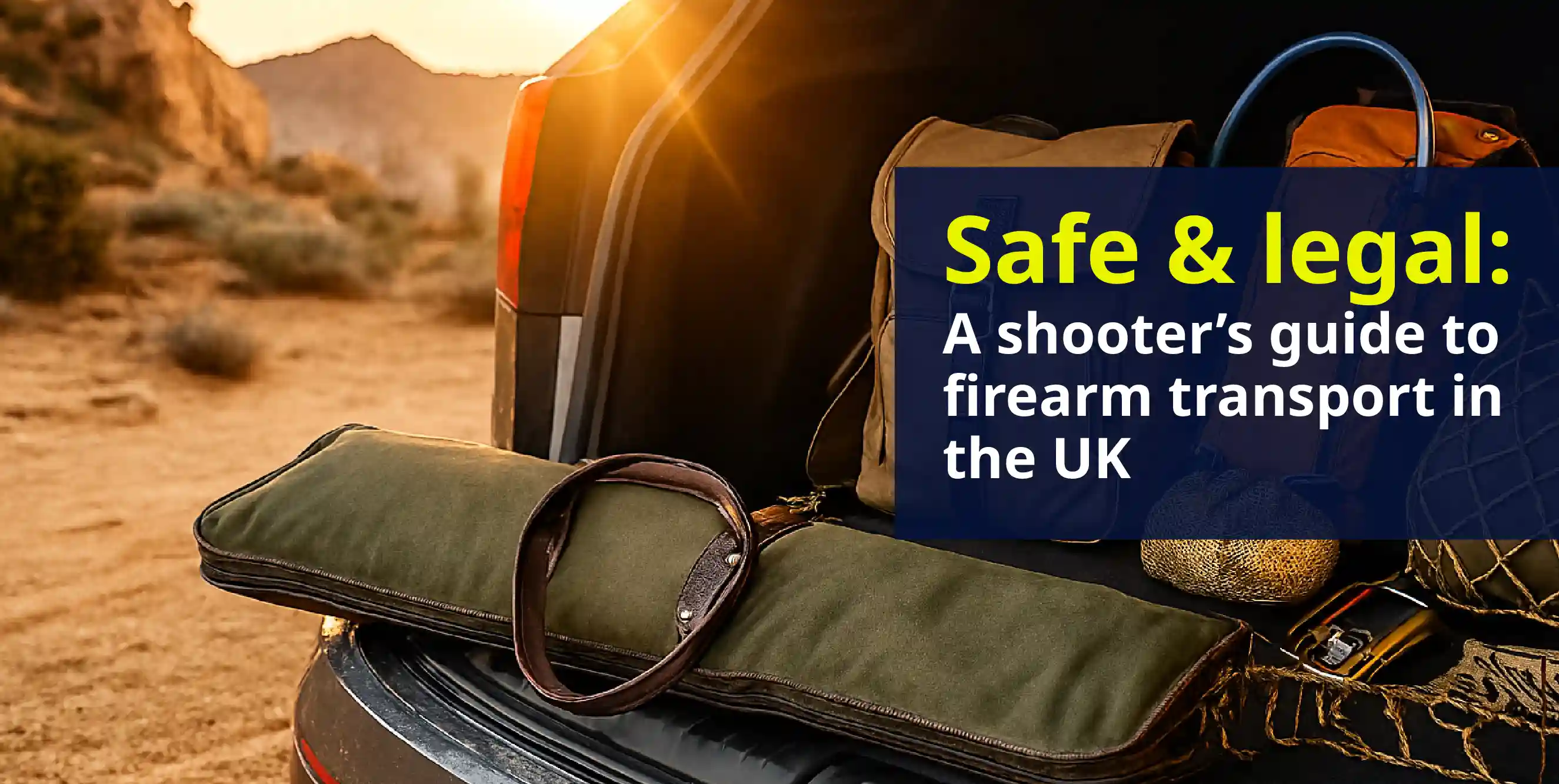
Whether you’re heading to the range, a game shoot, or your local gun shop, knowing how to transport firearms legally and safely is essential for every UK shooter.
The UK has some of the world’s strictest firearms laws, and even unintentional mistakes during transport can lead to serious legal consequences.
In this guide, we’ll break down the UK laws on transporting shotguns and rifles, explain what’s required to stay compliant, and share practical tips for keeping your firearms safe and secure while travelling.
Understanding the law
Under the Firearms Act 1968 and subsequent amendments, it’s legal to transport firearms in the UK only if you have lawful authority or a reasonable excuse — for example, travelling to:
A shooting ground or range
A game or pest control shoot
A gun shop, dealer, or gunsmith
A police station (for licence or inspection)
Your home or another licensed address
If you don’t have a lawful reason, carrying or transporting a firearm in public — even in a vehicle — can be classed as possession in a public place, which is a criminal offence.
So, as long as you’re a certificate holder and have a legitimate purpose, transporting your firearm is perfectly legal — provided it’s done safely and responsibly.
How to transport a shotgun or rifle safely
When moving your shotgun or rifle, the key principles are unloaded, secure, and discreet.
1. Always transport unloaded
Never travel with a loaded firearm.
The chamber, magazine, and breech must all be empty.
Check twice before placing it in your case or slip.
Keep ammunition separate from the firearm.
2. Use a secure gun case or slip
A proper gun case or lockable hard case is the best way to keep your firearm safe and protected.
Hard cases (lockable, foam-lined) are ideal for vehicle transport or air travel.
Soft slips are suitable for short trips or when carrying your gun on foot (e.g., from car to field).
3. Keep ammunition separate
Store cartridges or ammunition in a separate, closed container.
For rifles, it’s best to keep magazines and bolts removed and stored apart.
Ideally, place ammo in the boot or locked glove box, away from the firearm.
4. Transport out of sight
Firearms should always be kept out of public view.
Never leave a gun visible inside a vehicle.
When possible, use a vehicle boot or covered compartment.
Avoid unnecessary stops with guns in your car.
5. Lock and secure
If your vehicle has a lockable boot or secure compartment, use it. Some shooters even fit a trigger lock or cable lock for extra peace of mind.
6. Avoid leaving firearms unattended
You should never leave a firearm in an unattended vehicle.
If it’s absolutely unavoidable, remove a key component (e.g., bolt or fore-end) and keep it with you.
Lock the case, close the vehicle, and park out of public view.
Police and licensing authorities take unattended firearms very seriously — always err on the side of caution.
Transporting different firearms
Shotguns
Must be unloaded and in a slip or case.
It’s good practice to remove the fore-end or break the gun down when possible.
Ensure your Shotgun Certificate (SGC) is carried with you when transporting the gun.
Rifles / FAC Firearms
Must be unloaded, with bolt and magazine removed where possible.
Keep ammunition separate and secure.
Always carry your Firearm Certificate (FAC) when transporting rifles.
Police have the right to inspect your certificates and firearm if required.
Travelling by Air or Ferry
If you’re travelling for shooting abroad or between UK islands, you must follow additional transport rules:
Notify the airline or ferry company in advance — firearms must usually be declared and checked into the hold.
Use a hard, lockable case approved for air transport.
Ammunition must be packed separately, usually up to 5kg, in original packaging.
Always check with your carrier for specific regulations before travelling.
Insurance and responsibility
Even when you’re fully compliant, accidents or theft can still happen.
That’s why it’s wise to have shooting insurance that includes:
Firearms theft or accidental damage
Public liability cover
Legal protection
Most shooting organisations (like BASC or the Countryside Alliance) include this in their membership.
Read: What you need to know about shooting insurance
Practical checklist before every journey:
Firearm unloaded and checked twice
Stored in a case or slip
Ammunition separate and secure
Out of sight while in transit
Vehicle locked when unattended
Certificates carried with you
If you follow those steps, you’ll always be on the right side of the law — and demonstrate safe, responsible gun ownership.
Final thoughts
Transporting firearms legally in the UK isn’t complicated, but it does require care and attention.
By following the “unloaded, secure, and discreet” rule, you’ll stay compliant, protect your equipment, and uphold the reputation of the shooting community.
At Rightgun, we’re committed to promoting safe, responsible shooting. We stock a full range of gun slips, hard cases, locks, and accessories to help you travel safely and within the law.
Shop gun cases & security accessories at Rightgun.uk
Must read:
