
 14-Oct-2026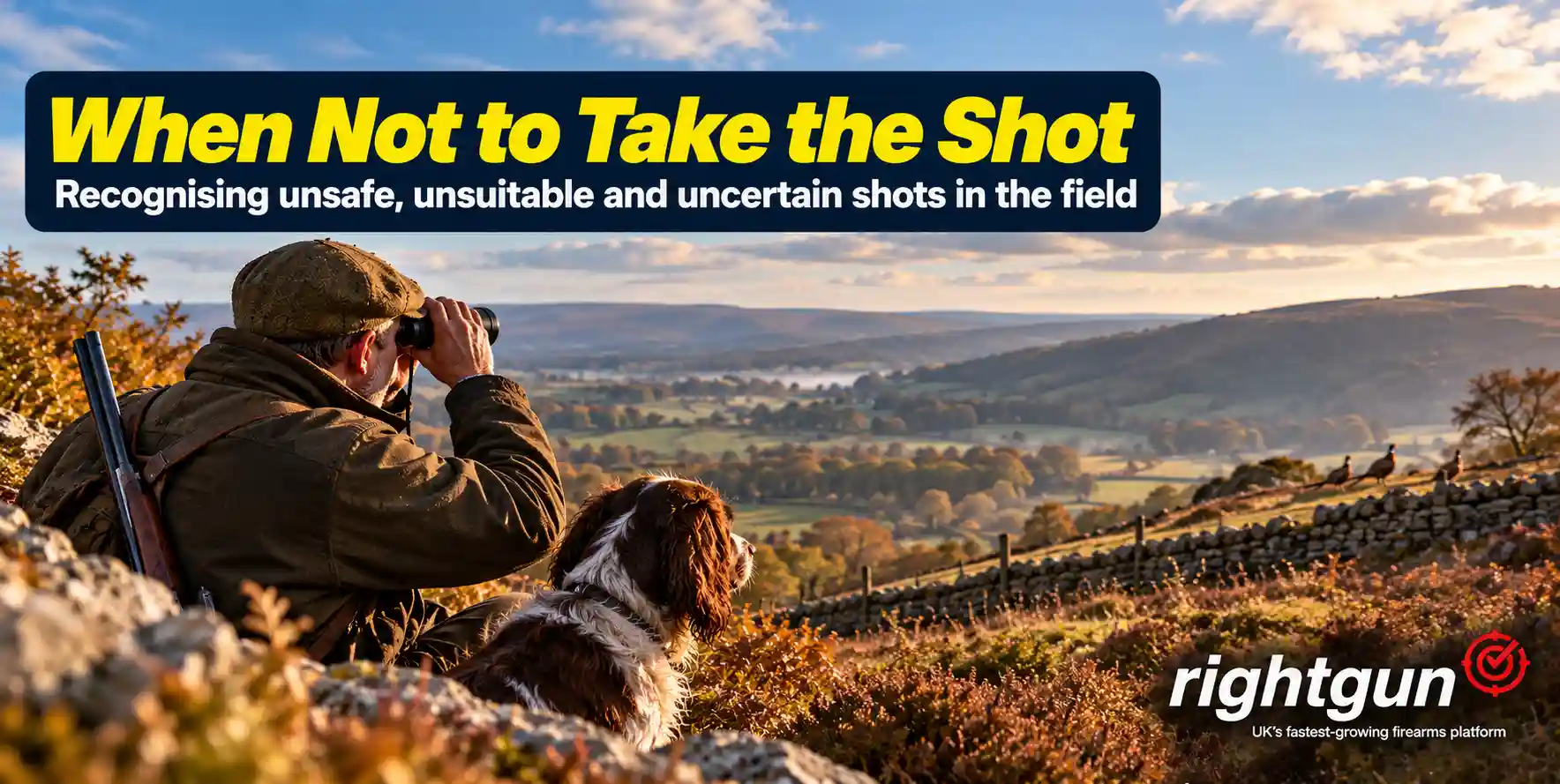
Yes, and it is the most valuable skill in game shooting. You do not shoot when the bird is low, when it is in line with beaters, pickers-up, dogs, vehicles, or other guns, when it is outside your safe arc, or when you are not sure what is beyond it. The short rule shoot captains repeat is simple: if in doubt, don’t. Letting a bird go costs you nothing, and nobody on the shoot will ever remember it against you.
This guide is for UK game shooters, from a first-season gun to someone who simply wants a tidy reminder before the pheasant season gets busy. It covers why leaving birds is part of the sport, how to read your peg and your arc, the situations where the answer is always no, and how to handle the gap between a safe shot and a good one. It is general shoot-day good practice, not a replacement for your host’s rules. Always follow the shoot captain’s briefing and the guns’ briefing on the day, because every shoot, drive and peg is different.
Why leaving a bird is part of good shooting
New guns often feel they have to shoot everything that comes over. In fact, the guns who are most welcome back are the ones who shoot safely and selectively. A shoot day depends on trust: the beaters, pickers-up and keepers are working in front of and around the line, and every gun is relying on every other gun to make sound decisions in a fraction of a second.
Leaving a bird is also a quality call. A bird that is too low, too distant, too awkward or too close to a hedge or ride is often a bird that will be wounded rather than killed cleanly. Game shooting values clean kills and respect for the quarry, so choosing not to take a poor chance is part of that responsibility, not a failure of nerve.
Browse: Shotguns for sale · Beretta shotguns · Browning shotguns · Beretta 686 · Browning B525
Know your peg, your arc and your neighbours
Before the first drive starts, take a good look around your peg. Notice where the guns on either side of you are standing, where the beaters will emerge, where the pickers-up will stand, and which direction is safe to swing. Your host or captain will usually brief you on this, and many shoots mark out safe arcs with pegs, flags, or natural features. If a briefing is unclear, ask. Nobody minds a question, and everybody minds a guess.
Your arc is the area in which you may shoot. Keep your muzzles inside it, and keep your head up and your eyes moving, because the line changes as birds rise and swerve. Be aware of the neighbouring guns even when you are focused on a bird, and remember that people and dogs can move. A quiet pickers-up behind a hedge a minute ago may be somewhere else now.
Browse: Gun parts and accessories · Hunting equipment · Shotguns for sale · Beretta A400 · Browning B725
The situations where the answer is always no
Some situations are not judgement calls. Never shoot low birds. A low bird is one where the shot could carry into the area where beaters, pickers-up, dogs, or other guns are, and the rule on most driven shoots is to let it go, however easy it looks. Never shoot at a bird that is in line with people or dogs, and never swing through the line, because the moment your muzzles cross it, you are pointing at someone.
Do not shoot when you cannot see clearly. Low sun, mist, thick cover, rain on your glasses, or a bird that appears from behind a tree can all leave you unsure what is past the bird. If you cannot see it, do not shoot it. The same applies to any bird that is going away from you towards the beaters or the pickers-up, even if it is a perfectly sporting shot.
Do not shoot when the drive is over, or before the drive has started, and do not shoot when the whistle or horn has gone to end it. Follow the shoot’s signals, and keep your gun open and unloaded or safe when told. Also be careful about ground game. Rules for hares, rabbits and other ground game vary from shoot to shoot, so listen to the briefing and shoot them only if your host has said so.
Browse: Gun accessories · Dogs · Hunting equipment · Torches · Safes and cabinets
Safe is not the same as sporting: The other reasons to let a bird go
Even when a shot is safe, it may not be a good shot. Some birds are simply beyond what you, your gun and your load can kill cleanly. How far is too far varies with the bird, the gun, the cartridge and the conditions, and there is no single figure that fits every shooter. A coach or a session at a clay ground will help you learn your own limits far better than a number in print.
Birds that are too close to the beaters’ flags, hedges or woodland edges, or that are flying very low over rough ground, can also be tricky to recover. Think about where a bird will fall. If it will drop into cover that is hard for the dogs to reach, or into a place the pickers-up cannot go, you may be better to let it go.
If your shoot asks for non-toxic shot as an alternative to lead, remember that it can pattern differently, so practise with what you plan to use and follow the shoot’s own rules on cartridges.
Browse: Shotguns for sale · Benelli shotguns · Fabarm shotguns · Miroku MK38 · Beretta DT11
Staying calm: Habits that make the call easier
Good habits turn a tricky decision into an easy one. Keep your gun safe and pointing up or down range between birds, and keep your safety catch on until you have decided to mount. Look first and mount second. Many guns get into trouble because the gun is up before the thought is finished, so make the safety check part of picking up the bird: where is it going, who is around, what is behind it?
A well-fitting gun helps, because a gun that comes up smoothly gives you more time to decide. If you are fighting your gun, you are more likely to snatch at a bird. Check gun fit before the season, and try a few models if you are unsure. Eye protection and hearing protection matter too, because you cannot make good calls if your vision is poor or you are distracted by noise.
Browse: Gun parts and accessories · Clothing · Beretta 686 · Browning Citori · Miroku shotguns
Dogs, pickers-up and the end of the drive
The pickers-up and their dogs are often out of sight, but they are working hard behind the line and sometimes in front of it. Treat every area as if someone could be in it. Mark where birds fall, tell the picking-up team what you saw, and keep your own dog steady if you have one with you. A friendly word to the pickers-up and beaters at the end of the day is always appreciated.
When the drive ends, unload or open your gun as directed and wait for the signal before you move. Never carry a loaded gun through gates, over fences or into vehicles. Good etiquette after the drive is just as much part of safe shooting as the decisions you make during it.
Browse: Dogs · Torches · Knives · Hunting equipment · UK gun shops
Frequently asked questions
When should I not shoot at a pheasant? Do not shoot when the bird is low, when it is in line with people, dogs or other guns, when it is outside your safe arc, or when you cannot see what is beyond it. If you are unsure, let it go.
What happens if I shoot a low bird by mistake? Tell the shoot captain or your host straight away. Most shoots would rather know, and an honest conversation is better than hoping nobody noticed.
Is it rude to leave birds? Not at all. Leaving a bird that is unsafe or beyond clean range is respected as good judgement, and guns who do this are usually invited back.
Who decides the safe arcs on a shoot day? The host and shoot captain, usually through the briefing and by marking pegs or features. Listen carefully, ask if you are not sure, and follow their instructions.
Ready to browse game guns?
Good judgement matters most, but a gun that fits you helps you make better decisions. Browse the latest shotgun listings on Rightgun.uk, compare makes and models, and find a game gun from sellers across the UK before the season is in full swing.
Browse: Shotguns for sale · Beretta shotguns · Browning shotguns · Gun parts and accessories · UK gun shops
Further reading: Pheasant shooting, Shotgun fit explained, Effective beating for pheasant shooting, Shooting glasses and Best alternatives to lead ammunition
