
 17-Dec-2025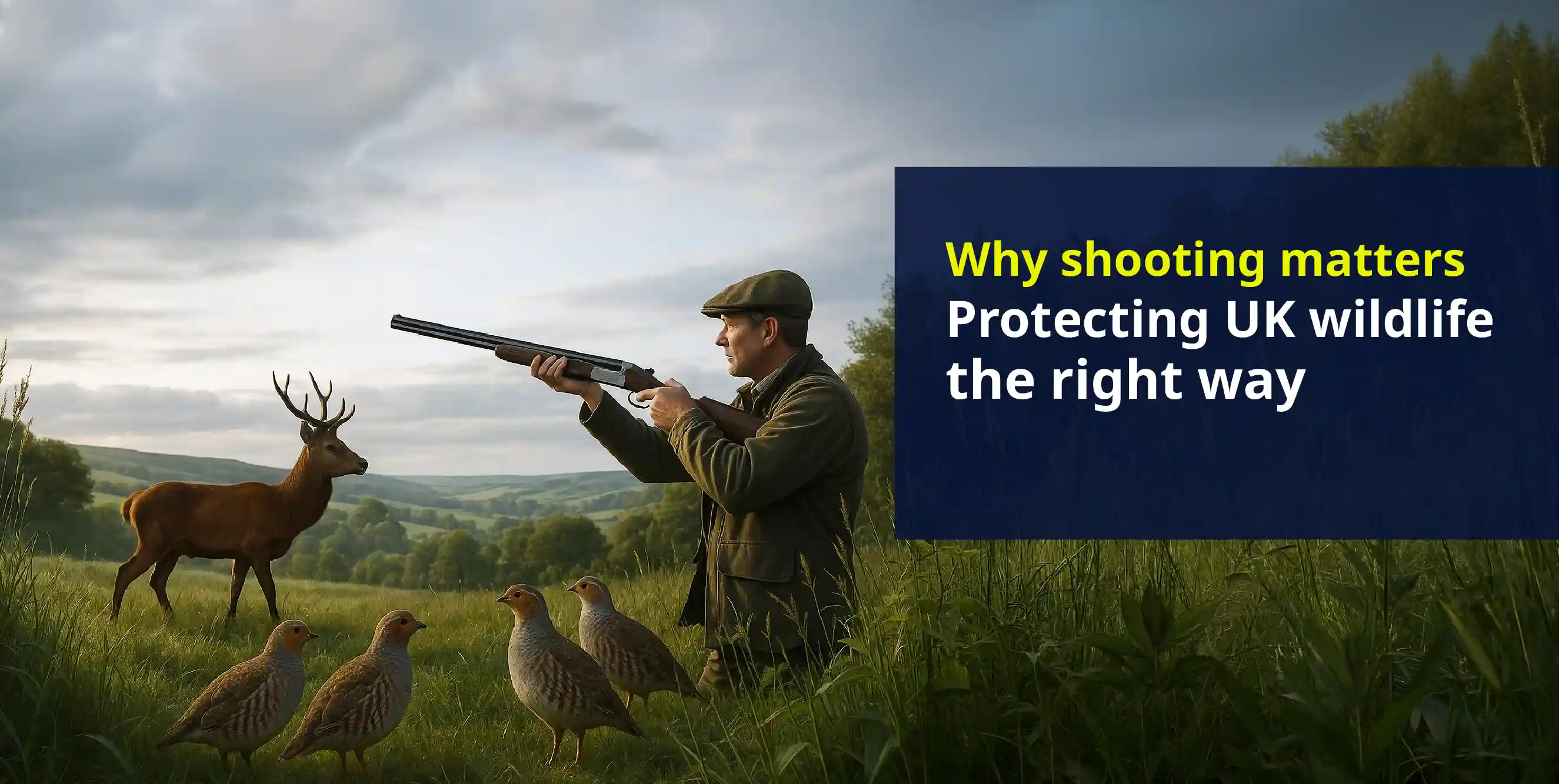
In the UK, shooting and game management play a vital role in maintaining a healthy, balanced countryside. Far from being purely a sport, responsible shooting contributes to habitat conservation, species control, and biodiversity protection across the country.
Whether it’s managing deer populations, controlling pests, or funding conservation projects, shooting underpins much of the environmental work that keeps our rural landscapes thriving.
Let’s explore exactly how shooting supports UK wildlife management and why it remains essential for conservation in modern Britain.
1. Controlling overpopulation and protecting habitats
One of the key roles of shooting is population control.
Species such as deer, rabbits, and grey squirrels can quickly grow beyond sustainable numbers without natural predators. Overpopulation leads to:
Overgrazing of woodlands and crops
Damage to young trees and hedgerows
Loss of nesting cover for smaller birds
Increased road accidents and crop losses
Through regulated shooting, wildlife managers can maintain healthy population levels that the landscape can support.
For example:
Deer management reduces browsing damage and helps regenerate native woodland.
Rabbit control protects crops and grassland.
Corvid and fox control prevents predation on ground-nesting birds like lapwing and curlew.
In short, shooting fills the role that natural predators once played, keeping balance in the ecosystem.
2. Habitat creation and conservation
Game shooting estates are among the largest private contributors to conservation in the UK.
According to data from BASC and GWCT:
Over 2 million hectares of land are actively managed for game and wildlife.
Gamekeepers plant hundreds of miles of hedgerows and cover crops every year.
Ponds, woodland rides, and wildflower margins are maintained specifically to benefit both game and non-game species.
These habitats provide food and shelter for songbirds, pollinators, hares, and countless other forms of wildlife, not just pheasants or partridge.
Without the funding and effort generated by shooting, many of these conservation areas simply wouldn’t exist.
3. Supporting biodiversity and rare species
Well-managed shoots contribute to broader biodiversity goals. By managing predators, planting cover, and maintaining a mix of crops, woodland, and grassland, shooting estates help support:
Songbirds such as skylark, linnet, and yellowhammer
Insects and pollinators in wildflower margins
Ground-nesting birds such as lapwing and grey partridge
The Game & Wildlife Conservation Trust (GWCT) has shown that areas under game management often have higher biodiversity than unmanaged land nearby.
Shooting isn’t just about gamebirds, it’s about the whole ecosystem.
4. Sustainable, locally sourced food
Every bird or animal taken in the field provides a traceable, free-range, low-carbon source of food.
Game meat such as pheasant, partridge, venison, and duck is:
Naturally free-range
High in protein, low in fat
Ethically sourced through sustainable management
Promoting game as food encourages respect for the quarry and reinforces the principle that nothing is wasted.
It’s a model of ethical field-to-fork sustainability that fits perfectly with today’s focus on local, responsible eating.
5. Economic and community benefits
Shooting contributes over £2 billion annually to the UK economy and supports around 70,000 full-time jobs, many in rural communities where employment opportunities can be limited.
That income helps sustain:
Rural businesses (lodges, pubs, and equipment suppliers)
Game farms and butchers
Conservation staff and keepers
The economic benefit of shooting directly funds habitat restoration, pest control, and conservation work year-round, far beyond the shooting season.
6. The role of regulation and responsibility
Modern game shooting is heavily regulated and supported by a strong culture of responsibility and best practice.
Organisations such as BASC, GWCT, and The Countryside Alliance promote ethical standards around:
Quarry selection and seasons
Use of sustainable ammunition (such as non-lead shot)
Habitat and predator management
Animal welfare and safety
Responsible shooters understand that conservation comes first. Good management means taking only what the land can support, ensuring future generations can enjoy healthy wildlife and vibrant countryside.
7. Shooting and the future of UK conservation
As environmental challenges grow, from climate change to habitat loss, the role of shooting will continue to evolve.
More estates are now:
Moving to lead-free cartridges and eco-friendly materials
Working with conservation charities to rewild or restore habitats
Using data-driven deer and pest control plans to maintain balance
Shooting remains a practical, science-based tool for managing wildlife sustainably, complementing conservation work across the UK.
Final thoughts
Shooting is far more than a countryside tradition; it’s a cornerstone of modern wildlife management in Britain.
From protecting crops to preserving rare species, from funding conservation to providing sustainable game meat, the benefits of responsible shooting are clear.
At Rightgun, we’re proud to support the UK’s shooting community, helping responsible shooters find the right equipment, ammunition, and knowledge to continue this important work.
Explore game shooting equipment and ammunition at Rightgun.uk
Must read:
