
 13-Nov-2026
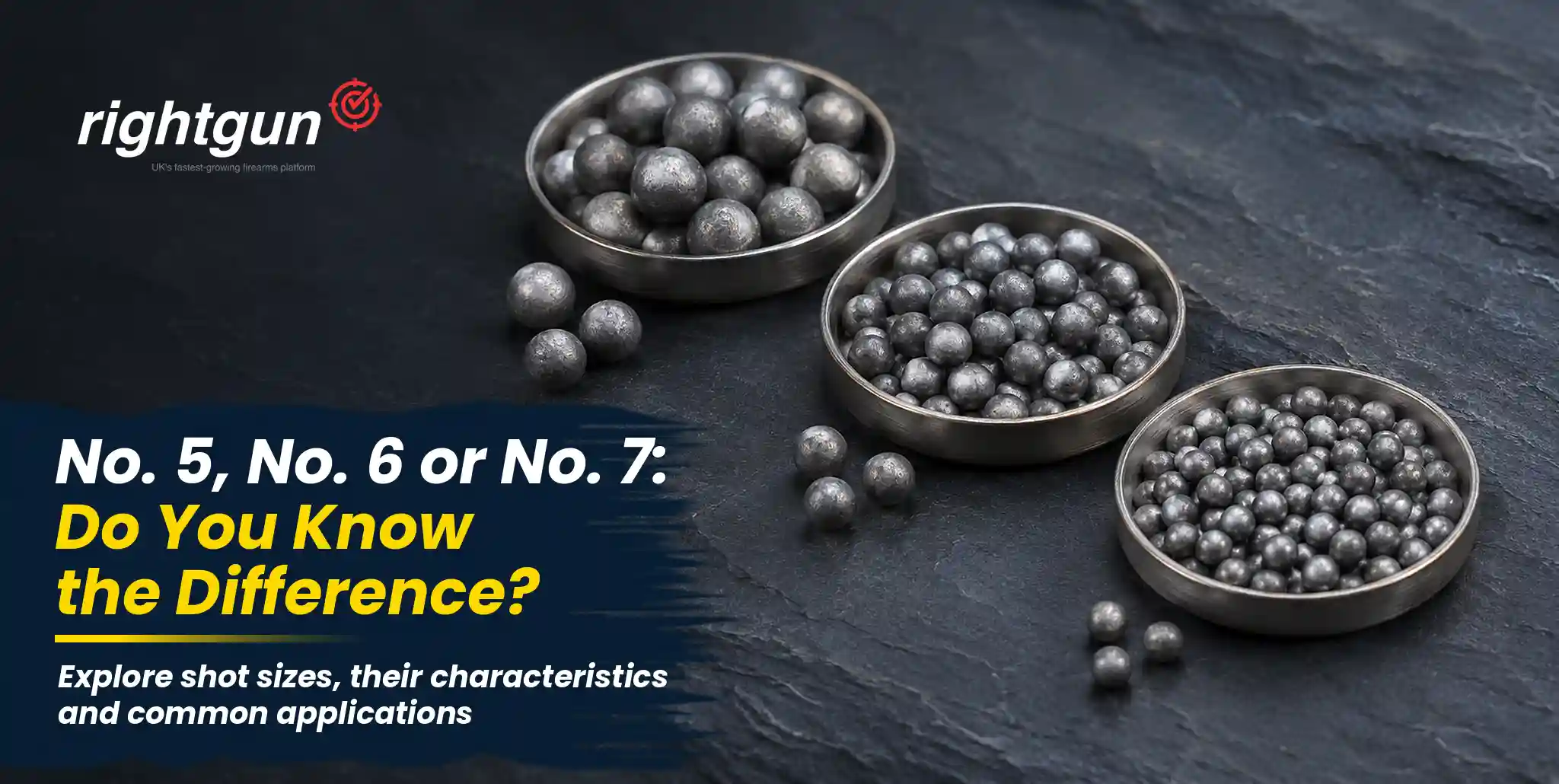
In the UK numbering system, the bigger the number, the smaller the pellet. So No. 5 is the largest of the three, No. 6 sits in the middle and No. 7 is the smallest. Larger pellets carry more energy and hold it further out, while smaller pellets give you more of them in the pattern. That trade-off is the whole story, and it is why all three sizes have their place in a UK cartridge bag.
This is general guidance for the UK shooting community. The right choice for you depends on your gun, your choke, the birds, the drive and the cartridge itself, so treat it as a starting point rather than a rule.
How shot numbering works in the UK
Shot is graded by number, and the system runs the opposite way to what many people expect. A lower number means a bigger pellet. No. 4 is bigger than No. 5, No. 5 is bigger than No. 6, and so on. The sizes people see on pheasant, pigeon and clay cartridges tend to sit in the middle of the range, which is why No. 5, 6 and 7 come up so often.
There are also half sizes, with No. 7½ being a familiar one on clay cartridges. Be careful if you read American articles or watch American videos. US and UK numbering are not the same, so a “number 6” in one country is not necessarily the same pellet as a “number 6” in the other. If you are comparing advice from different sources, check which system it uses.
Two more things are worth knowing. Pellet size is only one part of a cartridge; the load weight, the wad, the speed and the shot material all affect how it performs. And the number printed on the box is a starting point for choosing, not a guarantee of how the cartridge will pattern in your particular gun.
Browse: Shotgun cartridges · Fiocchi cartridges · Winchester cartridges · Gun parts and accessories · Shotguns for sale
What No. 5 shot is good at
No. 5 is the heavy hitter of the three. Each pellet is larger, so it carries more energy, and it keeps that energy better as the range grows. There are also fewer pellets in a given load, which means the pattern is naturally more open and has more gaps in it.
That makes No. 5 a sensible thought for bigger, tougher or more distant birds, such as high pheasants late in the season, when the birds are strong, well feathered and often flying a long way up. Some shooters also reach for it for wildfowl-type work, though the shoot’s rules on shot material come first there. The downside is exactly that thinner pattern. With a smaller target or a closer bird, there is a greater chance of the pellets passing either side. A good shot with a well-fitting gun can make No. 5 work beautifully, but it is less forgiving if your aim is slightly off.
Browse: Shotguns for sale · Browning shotguns · Beretta shotguns · Shotgun cartridges · Hunting equipment
What No. 6 shot is good at
No. 6 is the middle ground, and for many UK game shooters it is the default. Pellets are smaller than No. 5, so you get more of them in the pattern, but they are still large enough to carry good energy at typical game-shooting distances. It is often the sensible all-rounder for a mixed day of pheasant, partridge and the odd pigeon or duck, when you do not know exactly what will come over.
If you are not sure where to begin, No. 6 is a very common answer from experienced shooters and gunshops. That does not mean it is best for everyone. If the birds on your shoot are close and quick, or if the drives are particularly high, you may find one of the neighbouring sizes suits you better. Chat to the keeper or the shoot captain, who will know the birds on that ground, and to a coach if you want a view on how you are shooting.
Browse: Shotguns for sale · Miroku shotguns · Winchester shotguns · Shotgun cartridges · Clothing and bags
What No. 7 shot is good at
No. 7 is the smallest of the three, so it puts the most pellets into the pattern. That denser pattern is more forgiving on smaller or quicker targets and on birds at closer range. It is a popular choice for pigeon and for many general-purpose clay cartridges, and some shooters like it for early-season game or partridge when the birds are lighter and closer.
The trade-off is energy. Smaller pellets shed it faster, so a No. 7 load is generally better suited to nearer birds than to the very high ones. Shooters sometimes talk about a high pheasant that was “hit and kept going”, and sizes that are too small for the job can be part of that. That is a good reason to match the size to the bird and to shoot within your own comfortable range, rather than taking birds that are really too far.
Browse: Shotguns for sale · Fabarm shotguns · Benelli shotguns · Shotgun cartridges · Gun parts and accessories
Choosing between them for your shooting
Think about three things: the bird, the distance and your gun. A strong, high bird points towards a larger pellet. A closer, quicker or smaller target points towards a smaller one. Your choke matters too, because a tighter choke concentrates the pattern and a more open one spreads it. Our explainers on choke constrictions and choosing a choke for pheasant cover the basics, and cartridge selection is a good companion read.
The most reliable way to find out is to test. Many shooters pattern their gun on a plate to see how a particular cartridge and choke combination behaves, and a session at a clay ground or with a coach can tell you far more than a chart can. Different brands of the same nominal shot size can behave differently in the same gun, so it is worth trying a couple. Make sure, too, that the cartridge length matches your gun’s chamber; our guide to chamber length and cartridge length explains why.
Browse: Shotguns for sale · Shotgun cartridges · Gun parts and accessories · Services · Business directory
Steel, lead and other shot materials
Shot size is not the only variable; the material matters as well. Steel is lighter than lead for the same size, so it behaves differently, and many shooters find they choose a size or two larger when moving to steel, though advice varies and cartridge makers publish their own guidance. Other non-toxic materials behave differently again.
Lead shot is not allowed or welcome at every shoot, and rules differ between organisers and places. If you are thinking of switching, ask the shoot beforehand and check that your gun and chokes are suitable for the cartridge. Our guide to alternatives to lead ammunition is a starting point, but the shoot’s own rules and the gun’s maker have the final word.
Browse: Shotgun cartridges · Shotguns for sale · Safes and cabinets · Gun parts and accessories · Business directory
Frequently asked questions
Which is bigger, No. 5 or No. 7 shot? No. 5 is the bigger pellet. In the UK system, the higher the number, the smaller the shot.
What shot size is best for pheasant? There is no single answer. No. 5 and No. 6 are common choices, and No. 7 is also used earlier in the season or at closer birds. The drive, the birds, your gun and your choke all play a part.
Does a smaller shot size mean a better pattern? A smaller size puts more pellets in the pattern, which can feel more forgiving, but each pellet carries less energy. It is a trade-off rather than an upgrade.
Is UK shot sizing the same as US shot sizing? No, the numbering systems differ, so check which one an article or box is using before you compare.
Ready to find your next gun or cartridges?
Whether you are picking a cartridge for the season or thinking about a different gun, browse shotguns, cartridges and accessories from UK sellers on Rightgun.uk, or list your own kit if you are clearing space. For anything about licences or legal questions, speak to your registered firearms dealer and the police firearms licensing department.
Further reading: cartridge selection, shotgun choke tube constrictions explained, alternatives to lead ammunition and popular cartridges
