
 17-Apr-2026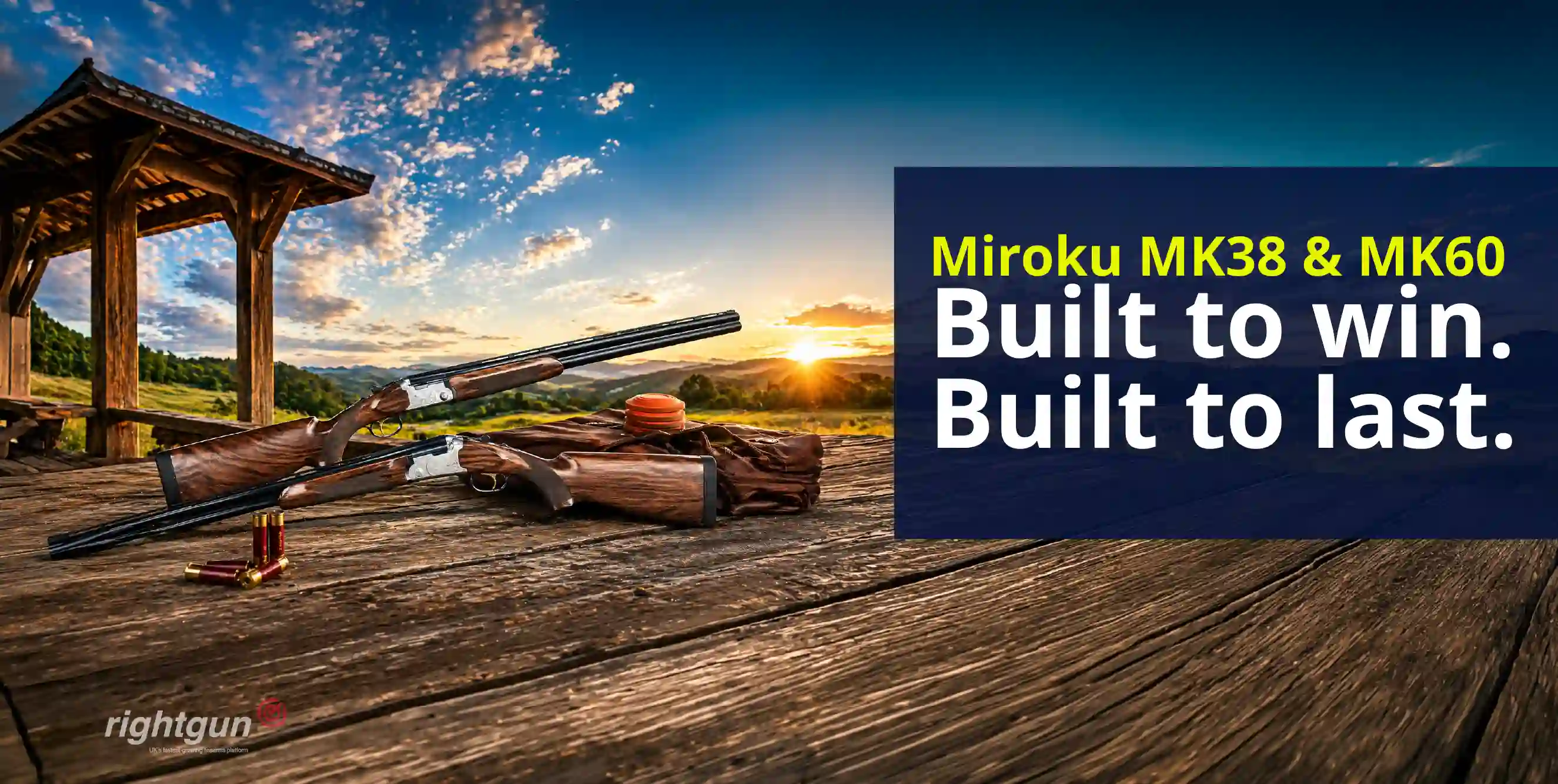
If you have spent any time looking at over-and-under shotguns in the mid-range bracket, you will have encountered the Miroku name. The MK38 and MK60 crop up everywhere: in gun room recommendations, in the hands of experienced clay shooters, leaning against a peg on a driven day. They are not glamorous guns. They do not carry the prestige of a Beretta or the cachet of a Browning, at least not overtly. But there is a reason shooters who know their way around a gunroom keep reaching for them, and it is worth understanding.
The factory behind the name
The story of Miroku as a manufacturer is one of the better-kept secrets in the shooting world, though it has become less of a secret over the years. The Miroku Manufacturing Company, based in Kochi in southern Japan, has been producing firearms since the 1950s.
For several decades they have been the factory behind some of the most respected shotgun names in the world, including Browning and Winchester. When you buy a Browning B525 in the United Kingdom, it was made at the same plant, by the same workforce, to the same standard as a Miroku.
That matters enormously to anyone thinking about value for money. The MK38 and MK60 are not budget approximations of better guns. They are the genuine article, produced in a world-class facility, sold without the premium that comes from a more famous badge on the receiver. The engineering tolerances at Miroku are exceptionally tight, which is why the actions on these guns feel so precise to open and close.
What actually differs with the MK38 and MK60?
The confusion between the two models is understandable. Both are over-and-under shotguns built on the same basic architecture, and both share the same fundamental strengths.
The MK38 has been the longer-established model, available in 12 bore, 20 bore, 28 bore, and .410, and it has built a loyal following across several decades of UK shooting. It is a gun that rewards straightforward maintenance and returns the favour with years of consistent performance.
The MK60 represents a modest evolution rather than a reinvention. The lines are slightly more traditional, the stock dimensions have been refined, and some shooters find the MK60 sits more naturally to the cheek on a fast mount. In practical terms, both guns are chambered for standard 70mm cartridges, both accept multi-chokes as standard, and both will handle a full season of game and a busy clay ground without complaint.
The choice between them often comes down to personal preference in handling. If you can get to a ground where you can try both, do so. The differences are real but subtle, and one will almost certainly feel fractionally better in your hands than the other.
In the field and on the clay ground
Where the Miroku guns earn their reputation is in sustained use. The ejectors on both models are crisp and consistent, spent cases come out cleanly at the correct angle, every time. This sounds like a small thing until you are on a busy peg trying to reload quickly, or when you are competing in a Sporting competition and rhythm matters. Ejector problems that plague cheaper guns simply do not appear here with any regularity.
The triggers on the MK38 and MK60 are another area of genuine strength. They break cleanly without the vagueness or creep that you find on guns two-thirds of the price. Over a season of use, a good trigger builds confidence in a way that is difficult to quantify but impossible to ignore. You come to trust the break, and that trust shows in your shooting.
Balance and weight are well-judged on both models. Neither gun is excessively muzzle-heavy, which matters on a driven day when you are mounting and swinging repeatedly for several hours. They sit comfortably in standard gun slips and carry naturally in the crook of the arm between drives.
Where they sit in the market
New MK38 and MK60 shotguns typically sit in the region of £1,100 to £1,600, depending on grade and gauge, and the used market is healthy. That price point puts them in direct competition with the entry-level Italian guns and the lower end of the Browning range, and they hold their own comfortably. A well-maintained second-hand Miroku from a reputable dealer will have many seasons left in it and will not let you down.
They are not the right choice if you need a gun that generates admiring glances at the peg, or if you are investing in something you intend to pass down as a family piece. For that, you would look elsewhere. But if what you want is a shotgun that performs reliably day after day, that fits most shooters reasonably well out of the box, and that does not demand constant attention or expensive servicing, the MK38 and MK60 make a compelling case.
They are honest guns, built by honest craftsmen, in a market full of marketing noise, that counts for a great deal.
Must read:
