
 26-Oct-2026
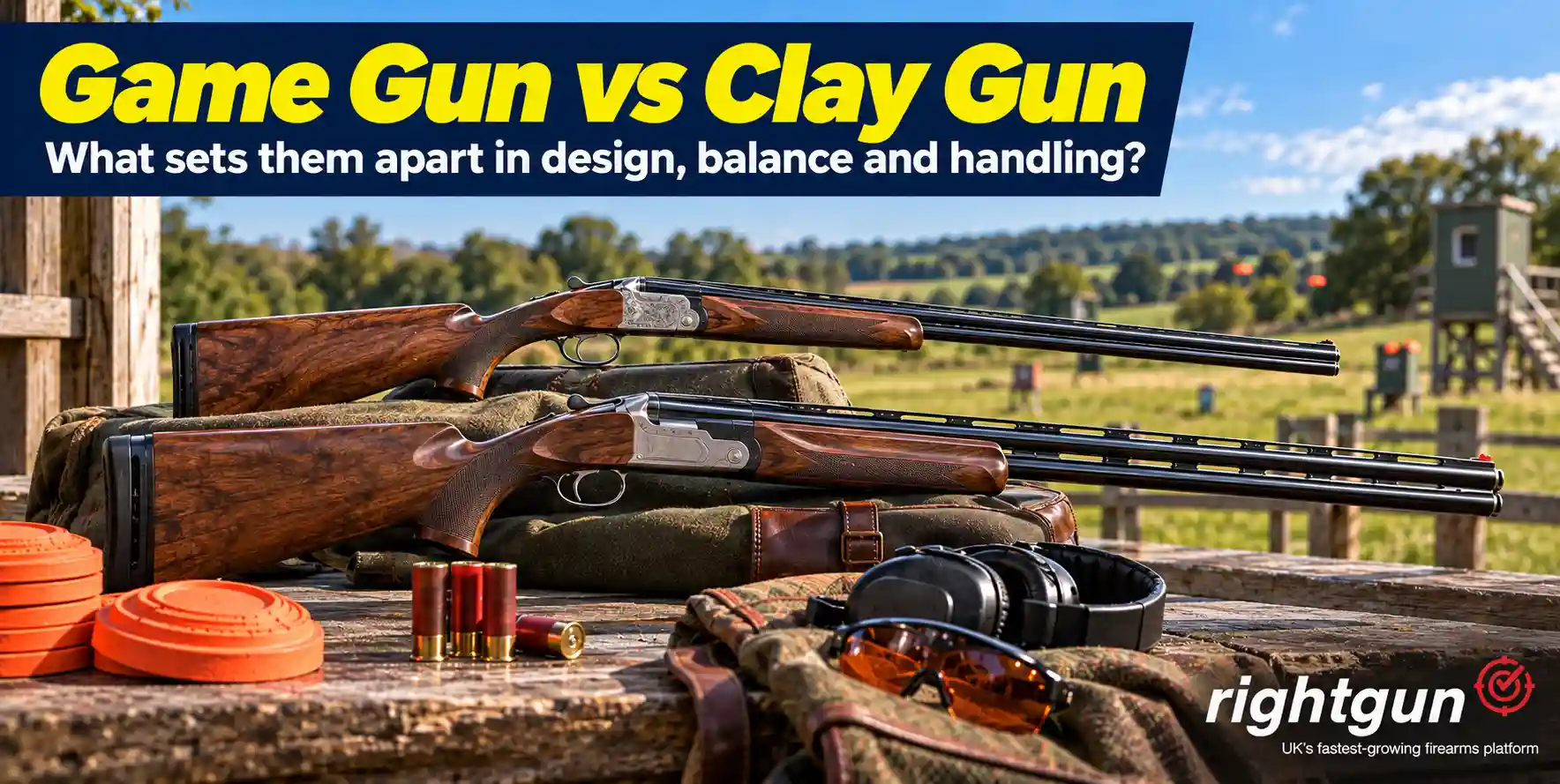
In short, a game gun is built to be carried all day and shot quickly at live birds, while a clay gun is built to be shot repeatedly and consistently at targets. That usually means a game gun is lighter, a little shorter in the barrel, and more open in its chokes, and a clay gun is heavier, longer, and often adjustable. The two overlap far more than the labels suggest, though, and plenty of shooters happily use one gun for both. This guide explains where the real differences lie, so you can decide which suits the way you shoot.
Why do people talk about “game guns” and “clay guns” at all?
The two names describe the job the gun was designed to do. A game gun is made for a day in the field: walking between drives, standing on a peg, carrying it through wet ground and mounting it fast when a bird appears. Weight and handling matter because you will hold it, carry it and shoot it in all weathers over many hours. A clay gun, often called a sporting gun, is made for a round or a day on the clay ground, where you may fire a hundred cartridges or more at presented targets and want the gun to feel the same on the first shot and the last.
Neither label is a rule. Makers sell the same model in several configurations, and a gun sold as a game gun can break clays well, just as a sporting gun can be used on a shoot day. What the labels really point to is a set of design choices that nudge handling one way or the other. If you understand those choices, you can read any listing and see what the gun is likely to be good at.
Browse: Shotguns for sale · Beretta 686 · Browning B525 · Miroku MK38 · Winchester 101
How do weight and balance differ?
Weight is the first thing most people notice. A game gun tends to be on the lighter side, so it is comfortable to carry and quick to the shoulder when a bird gets up. A clay gun tends to be heavier, which helps soak up recoil over a long session and keeps the barrels swinging smoothly through the target line.
Balance follows weight. Game guns are often described as lively, with the weight closer to the hands, while clay guns often carry more weight towards the muzzle so the gun swings steadily rather than flicking. Neither is better in the abstract. A lively gun can feel wonderful on a snap shot at a bird and unforgiving when you are trying to repeat a smooth swing, while a steady gun can feel heavy at the end of a long walked-up day. Hold a few and notice how each one feels when you move it between two points, because that tells you more than any figure on a specification sheet.
Browse: Beretta 692 · Beretta 694 · Browning B725 · Caesar Guerini shotguns · Fabarm shotguns
What about barrels, chokes and chambers?
Barrels are the most visible difference. Game guns commonly have somewhat shorter barrels, which makes them handier in cover, around vehicles, and when climbing into a butt or hide. Clay guns often have longer barrels, which many shooters feel gives a smoother, more settled swing and a longer sighting plane. These are tendencies, not requirements, and barrel length is only one part of how a gun handles.
Chokes differ in how they are used. Game birds are often taken at a range of distances, and many game shooters like fairly open chokes so the pattern spreads enough for closer birds while still holding together for further ones. Clay shooters tend to change chokes to suit the discipline and the target, with interchangeable tubes being very common on sporting guns. Check the shoot’s rules and ask your coach before you settle on a tube. The best choke depends on the target, the cartridge and the conditions, so treat any rule of thumb as a starting point and pattern your own gun.
Chambers matter on game days too. A game gun often has chambers that suit the cartridges your shoot uses, and you should always match your cartridges to the chamber length marked on the barrels. If you are unsure, ask a gunsmith.
Browse: Beretta DT11 · Miroku MK60 · Krieghoff shotguns · Perazzi shotguns · Gun parts and accessories
Does stock fit and adjustability change?
Yes, and this is where the two worlds really diverge. Many clay guns come with adjustable combs, adjustable butts, or the option to add spacers, because a clay shooter often shoots the same targets repeatedly and wants the gun to fit precisely. Competition guns are frequently fitted very exactly, and some sit higher in the stock to suit a particular style of shooting.
Game guns more often have a fixed stock, fitted for a driven day in thicker clothing, and the emphasis is on a gun that mounts naturally every time without fuss. Many traditional game guns are side-by-sides or classic over-unders where the stock is shaped by the maker. Either way, fit matters more than the label. A gun that fits you will serve you better in the field or on the ground than a more expensive one that does not, so it is worth reading our guide to shotgun fit and, if you can, booking a session with a fitter.
Browse: Shotguns for sale · Browning B425 · Beretta 687 · Beretta 682 · Local gun shops and dealers
Can one gun do both jobs?
For many shooters, yes. A mid-weight over-under with multichoke barrels can do a good job on a rough shoot, on a driven day, and at the clay ground, and for most people that is the sensible answer. A single versatile gun means less to buy, less to store, and a gun you know well. Some prefer to keep a lighter gun for the field and a heavier one for competition, but that is a luxury and not a necessity.
The compromise is in the details. If most of your shooting is game, lean towards a gun that is comfortable to carry and quick to mount. If most is clays, lean towards one that feels steady and fits you precisely. If you are splitting your time, a gun with a little more weight than a pure game gun, or a slightly lighter one than a pure sporter, often suits both. The best game shotguns buyer’s guide and our guide to trap, skeet and sporting clays will help you weigh up what you do most.
Browse: Beretta 686 · Browning B525 · Beretta A400 · Browning Maxus · Miroku MK38
How should you choose when buying or selling?
When you are buying, decide what you will do most, then handle as many guns as you can. Ask about weight, barrel length, chokes, stock alterations, and the chamber length marked on the barrels. Photographs of the side of the stock, the barrel markings, and the action help you judge a gun before you travel to see it. Our guide to buying your first shotgun goes through the basics in more detail.
If you are selling, say clearly what the gun has been used for, whether it comes with multichoke tubes or adjustable parts, and whether the stock has been altered. Buyers searching for a game gun and buyers searching for a clay gun are looking for different things, so describing your gun honestly helps it reach the right person. Rightgun.uk is a specialist UK marketplace, so your listing sits in front of shooters who know what they are looking for.
Browse: Shotguns for sale · Beretta 694 · Holland & Holland shotguns · Purdey shotguns · Local gun shops and dealers
FAQ
Is a sporting gun the same as a clay gun? Mostly, yes. Sporting gun is the common name for a gun built for sporting clays and general clay shooting, and people often use “clay gun” to mean the same thing. Trap and skeet guns are more specialised variants.
Can you use a clay gun for game shooting? Many people do. A clay gun is usually a little heavier, so it can feel less lively in the field, but it can work well on a shoot day if it fits you and suits the cartridges your shoot allows. Check the shoot’s rules before you go.
Is a game gun good enough for clays? Yes, particularly for casual or practice shooting. Competition shooters often prefer a gun with a heavier feel and adjustable fit, but a well-fitting game gun can break plenty of clays.
What should I look for in a first shotgun if I shoot both? A reliable, mid-weight over-under with interchangeable chokes and a good fit is a sensible place to start. Try several before you buy, and speak to a coach or fitter if you can.
Ready to find your next shotgun?
Whether you want a lively gun for the pheasant season or a steady one for the clay ground, you can compare real guns side by side on Rightgun.uk. Browse the latest shotguns for sale, speak to a local gun shop or dealer about handling a few, or look through gun parts and accessories for recoil pads and spacers. If you are selling a game gun or clay gun, list it on Rightgun.uk and reach UK shooters looking for exactly that.
Further reading: Shotgun fit, Buying your first shotgun in the UK, and Trap vs skeet vs sporting clays
