
 04-Nov-2026
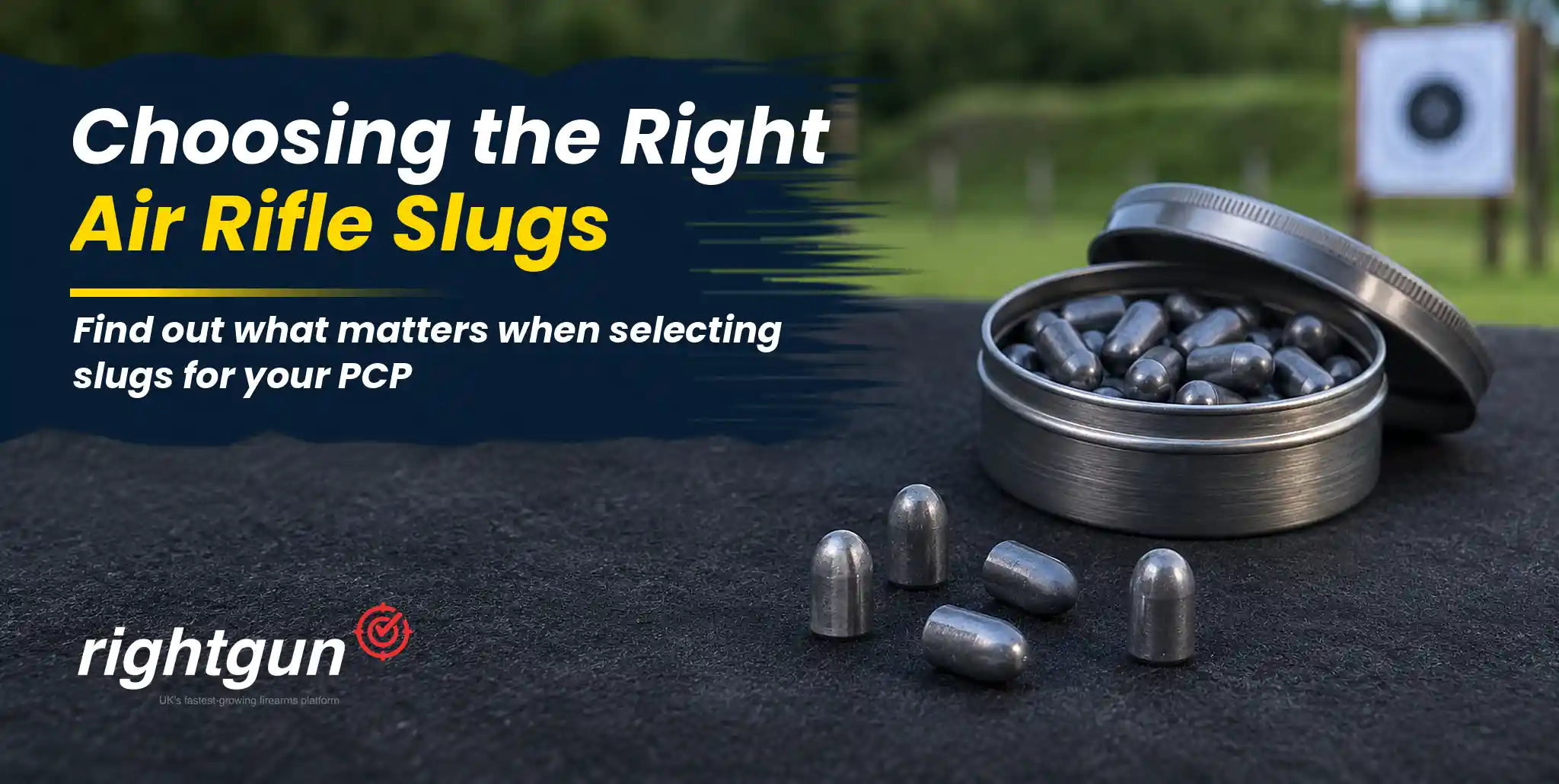
Walk onto any airgun forum or into any gun shop and sooner or later someone will tell you that slugs have changed everything. Others will tell you they are a fad that only works in certain rifles. As usual, the truth sits somewhere in the middle. Slugs are a genuinely useful option for some shooters and some rifles, and a waste of money for others. This guide explains what an air rifle slug is, which rifles suit them, how to choose a calibre and weight, and how to test them without wasting a tin.
We are keeping this practical rather than technical. No slug is best in every rifle, and results depend on your barrel, your regulator setting and the shooting you do. Treat anything here as a starting point for your own testing.
What is an air rifle slug?
A pellet has a hollow skirt at the back and a pointed or domed head, the classic diabolo shape. A slug is a solid, usually cylindrical projectile, often with a hollow base and grooves or a smooth body, designed to be fired from rifles that can handle them. Because of its shape and weight, a slug can retain energy well and resist wind drift better over longer distances, which is why the long-range and hunting crowd took to them.
We cover the basics in more detail in our article on airgun slugs versus pellets. Here we want to answer the follow-up question: if you decide to try slugs, what should you buy?
Browse: Air rifles for sale · FX air rifles · Air Arms air rifles · Daystate air rifles · BSA air rifles
Which rifles shoot slugs well?
This is the question that matters most. Slugs generally suit PCP rifles, and in particular regulated PCPs, because a stable, consistent shot-to-shot pressure helps a heavier projectile perform predictably. Many modern PCPs are designed with slugs in mind, with barrels and magazines made to cope with them.
Spring-piston and gas-ram rifles are a different story. Most are happiest with pellets, and forcing slugs through a rifle not designed for them can mean poor accuracy and wasted money. Always check the manufacturer’s guidance for your rifle before you buy a tin.
If you are still deciding between a spring rifle and a PCP, read our comparison of spring versus PCP airguns. If you have decided on a PCP and want to see what suits your budget, the best PCP air rifles in the UK by budget is a good next stop.
Browse: FX air rifles · Air Arms S510 · Weihrauch HW100 · BSA R10 · Brocock air rifles
Choosing a calibre
The calibre of your rifle decides which slugs you can use, so there is no choice to make here unless you are buying a new rifle. What you can decide is whether your preferred calibre makes sense for slugs.
Larger calibres, particularly .22 and .25, are the more common homes for slugs, because there is enough projectile size and weight to make a meaningful difference. In .177, slug choices are narrower and many shooters stay with quality pellets. This is a generalisation rather than a rule, and plenty of shooters have good results in every calibre.
Our guide to .177 versus .22 versus .25 air rifle calibres walks through the trade-offs if you are choosing a rifle with slugs in mind.
Browse: FX Crown · FX King · Daystate Red Wolf · Air Arms S400
Weight, size and the makers worth knowing
Slugs come in a spread of weights and sizes, and the right one depends on your rifle and your purpose. Heavier slugs tend to carry energy well and may suit hunting-style shooting. Lighter ones can suit target work or rifles with limited power. The sensible approach is to buy a small selection and test.
Several makers are widely respected, and you will see the same names again and again in forums and shops. JSB, Air Arms, H&N and FX all produce slugs, and some rifle makers supply their own. Rather than rank them, which would depend on your particular rifle, we suggest starting with whichever your rifle manufacturer recommends, then branching out.
Pellets still have their place, and if you are not sure slugs are for you, there is no shame in staying with a quality pellet. If you would like to see how one maker approaches the whole system of rifle, regulator and projectile, our FX airguns range guide is a useful read, and the FX line-up is worth exploring.
Browse: FX air rifles · FX Dreamline · FX Wildcat · FX Panthera
How to test slugs properly
A slug test does not need to be elaborate, but it does need to be consistent. Here is a simple routine:
Start with a clean barrel and a fully filled cylinder.
Shoot a few settling shots, then fire several five-shot groups at a sensible distance on a calm day.
Change only one thing at a time, whether that is the slug or the regulator setting.
Write down your results so you are not relying on memory.
If groups open up as the cylinder empties, note it; you may be seeing a limit of your fill or regulator setting.
Do not judge a slug on a single group. Barrels can be fussy, and a rifle that shoots one tin brilliantly may do less well with another, even of the same weight and brand.
Browse: Moderators · Thermal and optics · Gun parts and accessories · Air Arms Pro-Sport
Fill, regulator and the rest of the system
Slugs do not live in isolation. Your fill pressure, regulator setting, barrel and magazine all play a part, and a tin of slugs that disappoints in one set-up can shine in another. Many PCP owners find that a small regulator adjustment makes a bigger difference than switching brands. If your rifle has an adjustable regulator, change it in small steps and log what happens at the chronograph or on paper.
It is also worth thinking about the practical side. Slugs are often supplied in tins of a different size from pellets, and a rifle’s magazine may be designed for one or the other. Make sure whatever you buy feeds cleanly. Keep your barrel clean, avoid mixing different slugs within a session and store them in their tins to protect the skirts and bases. Little habits like these tend to separate shooters who get consistent results from those who chase their tails.
Are slugs worth it?
For many PCP owners, yes, particularly if you shoot at distance or in wind and your rifle was built with slugs in mind. For spring-rifle owners and casual plinkers, probably not. Slugs cost more per shot than most pellets, and they only repay that cost if your rifle can use them.
If you are considering a new rifle partly because of slugs, take your time. Compare several, think about the shooting you actually do, and look at second-hand examples if you want to keep the budget sensible.
Browse: Weihrauch HW100 · Air Arms TX200 · BSA R12 · Theoben Rapid
Frequently asked questions
What are air rifle slugs? Solid, usually cylindrical projectiles designed to be fired from rifles that can use them, most commonly regulated PCPs.
Are slugs better than pellets? Not always. Slugs can perform well in suitable PCPs, but many rifles shoot pellets better. It depends on your rifle and your shooting.
Can I use slugs in a spring air rifle? Most spring rifles are designed for pellets. Check your manufacturer’s guidance before trying slugs.
Which calibre is best for slugs? Larger calibres such as .22 and .25 are the more common choice, although results vary by rifle.
Find a slug-friendly PCP
If slugs have you thinking about a new rifle, start with the PCPs shooters actually talk about. Browse air rifles for sale on Rightgun.uk, compare new and used options from UK sellers, and if you have a rifle you have outgrown, list it where airgun enthusiasts are already searching.
Further reading: Airgun slugs versus pellets, Spring versus PCP airguns, Best PCP air rifles in the UK by budget and FX airguns range guide.
