
 03-Aug-2026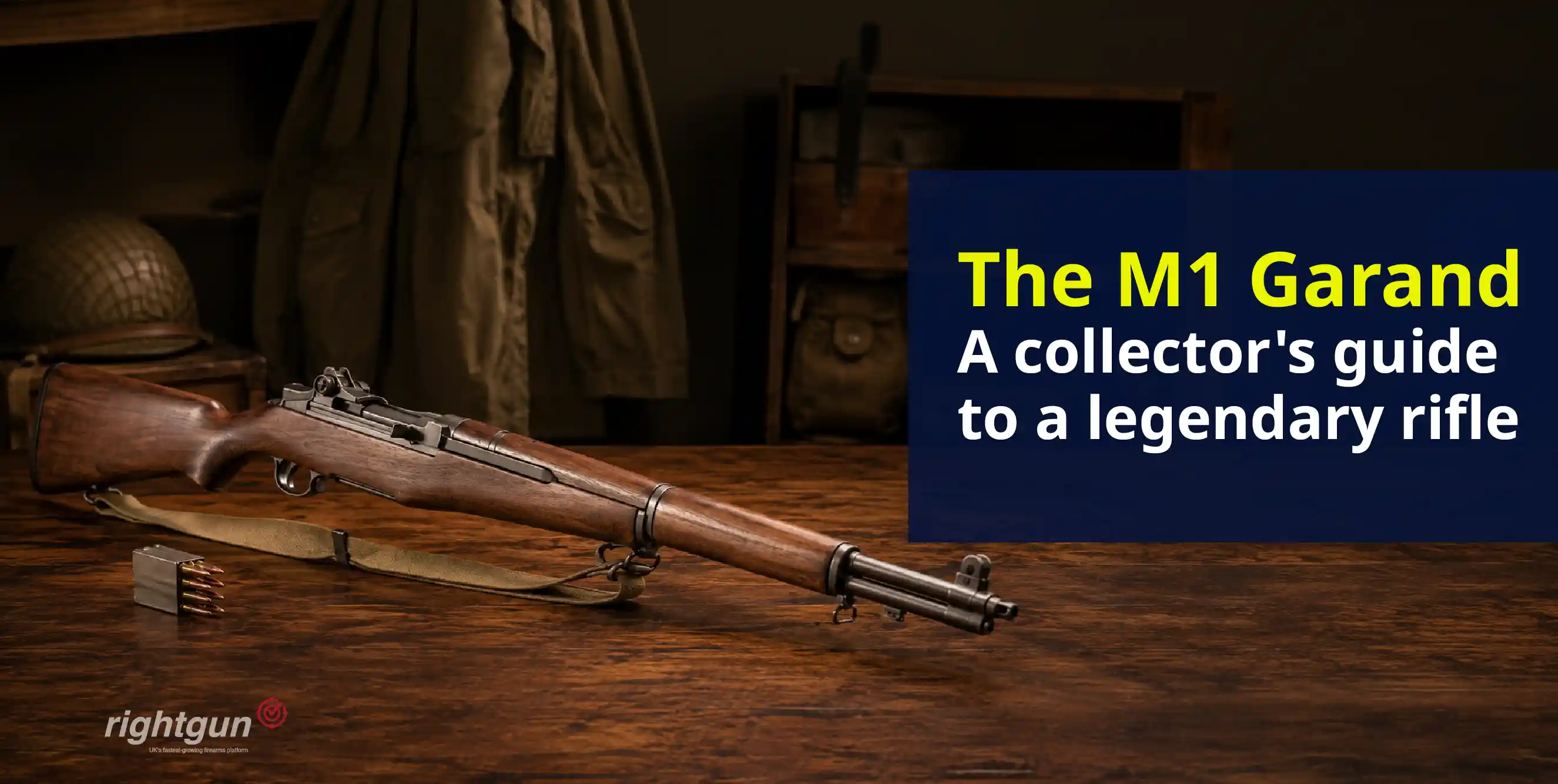
General Patton famously called it “the greatest battle implement ever devised”, and eighty years on the M1 Garand still carries a presence few rifles can match. For UK collectors of military firearms, the Garand sits alongside the Lee-Enfield and the Mauser K98 as one of the essential rifles of the twentieth century, and unlike many wartime arms, it remains a practical, shootable piece of history. Here is what UK buyers should know before adding one to the cabinet.
Why the M1 Garand matters
The M1 Garand was the standard-issue rifle of the United States military through the Second World War and Korea, and the first semi-automatic rifle adopted as standard issue by any major power. At a time when most infantrymen worked a bolt between shots, the Garand’s gas-operated action and eight-round en-bloc clip gave American soldiers a decisive edge, and gave the world the distinctive “ping” of an ejected clip that every war film has borrowed since.
Millions were produced, principally by Springfield Armoury, with Winchester and other contractors adding wartime production. That scale means the Garand survives in meaningful numbers today, and a healthy international collector market has grown around the maker’s marks, production dates and arsenal rebuild histories that tell each rifle’s individual story.
Owning a Garand in the UK
In the UK, the M1 Garand is owned as a Section 1 firearm on a firearm certificate, in the same way as other full-bore rifles; our guide to what a Section 1 firearm is explains the categories. Collectors typically hold them for target shooting at clubs with suitable ranges, and Classic and historic service rifle disciplines give Garand owners a competitive home, with matches dedicated to as-issued military rifles.
Chambered in .30-06 Springfield, the Garand is a full-power rifle that needs a range certified for the cartridge, so it is worth confirming your club can accommodate it before you buy. Ammunition is available in the UK, though shooters of original rifles are careful about ammunition selection; the Garand’s gas system was designed around military-specification .30-06, and knowledgeable owners stick to loads appropriate for the platform. A good gunsmith or the service rifle community can point you in the right direction.
What drives value
Garand values in the UK vary widely, and understanding why is most of the battle. The headline factors are originality, maker, production date and condition. A rifle with matching, correct-period parts commands a premium over an arsenal rebuild with mixed components, though rebuilds are entirely legitimate rifles with their own history, and they make excellent shooters at friendlier prices. Wartime Springfield production is the classic collector’s choice; Winchester-made rifles typically carry a premium for scarcity.
Condition follows the usual collector logic: original finish, crisp markings, good bore. Be realistic about what you are buying; most Garands led hard service lives, and honest wear is part of the rifle’s character. What matters is that the rifle is mechanically sound and that its configuration matches what the seller claims. The same principles apply here as with other collectable service rifles; provenance and originality drive the market, just as they do for Lee-Enfields and Mausers.
Inspecting a Garand before you buy
A few checks separate the informed buyer from the hopeful one. Ask about the bore condition and muzzle wear; decades of service and corrosive-primed wartime ammunition mean bores range from bright to tired, and this affects both shootability and price. Confirm the maker’s markings on the receiver and, if originality is claimed, ask which parts are correct to the period. Serial number references are widely published for dating receivers.
Function checks are straightforward for a rifle of this type: the action should cycle smoothly, and the safety should engage positively. If you are new to the platform, viewing the rifle with someone experienced in service rifles is never wasted; the Garand collector community in the UK is small but knowledgeable, and most sellers of quality rifles welcome informed inspection.
The Garand alongside its contemporaries
Part of the Garand’s appeal is how naturally it completes a collection of twentieth-century service rifles. Set one beside a Lee-Enfield No. 4 and a Mauser K98, and you have the three great infantry rifles of the Second World War in one cabinet, bolt-action doctrine from Britain and Germany against the semi-automatic future arriving from America. For shooters, the comparison is just as interesting on the range as on the rack, and historic service rifle matches often see all three shot side by side.
Interest in classic military rifles has been climbing steadily among UK shooters, and the Garand’s combination of history, engineering and shootability makes it a natural next step for collectors who started with the more affordable British and German rifles.
Caring for a piece of history
A Garand that has survived eighty years deserves sympathetic ownership, and caring for one is well within any shooter’s abilities. Routine cleaning after range sessions, attention to the gas system as recommended for the platform, and sensible storage in a stable environment will keep the rifle sound for another generation. The stock deserves particular thought: original wartime wood, complete with its dings and arsenal stamps, is part of the rifle’s documented history, and the collector market consistently rewards untouched examples over refinished ones. Resist the urge to sand out every mark. Keep any paperwork, import records or provenance documents that come with the rifle; they add to both the story and the value. If a part does need replacing, correct-pattern components are available through specialist suppliers, and recording what was changed preserves the rifle’s honesty for the next owner.
Frequently Asked Questions
Can you legally own an M1 Garand in the UK? Yes. It is held on a firearm certificate as a Section 1 firearm, like other full-bore rifles used for target shooting.
What calibre is the M1 Garand? Original rifles are chambered in .30-06 Springfield. Some rifles were converted to .308 Winchester over the years, so always confirm the chambering of the specific rifle you are viewing.
Is the M1 Garand a good investment? Collectable service rifles have generally held their value well, and clean, original Garands are sought after. As with all collectables, buy the best condition and provenance you can and think in years, not months.
How much does an M1 Garand cost in the UK? Prices vary significantly with originality, maker and condition, from working arsenal rebuilds to premium original wartime examples. Browsing current listings is the best way to gauge the market at any given time.
Find an M1 Garand on Rightgun
Rightgun’s dedicated marketplace brings together military and classic rifles from sellers across the UK. Browse the current M1 Garand listings, explore the wider rifles section for Lee-Enfields, Mausers and other service rifles, and if you have a Garand to sell, listing it on Rightgun puts it in front of the collectors actively searching for one.
Read next:
